Cart
0

The Ultimate Guide to Choosing the Best Cookware: Materials, Types, and Care Tips
Choosing the right cookware is essential for any kitchen, whether you're a beginner or a seasoned chef. This guide covers the best materials, key cookware types, and maintenance tips to help you build a lasting, high-performing collection.
Key Takeaways
- Cookware material affects cooking performance, durability, and maintenance.
- Stainless steel, cast iron, carbon steel, nonstick, copper, and hard-anodized aluminum each have unique pros and cons.
- Essential cookware types include saucepans, frying pans, sauté pans, stockpots, Dutch ovens, and specialty pans.
- Choosing individual pieces tailored to your cooking habits is often smarter than buying sets.
- Proper care and seasoning extend cookware lifespan significantly.
Table of Contents
- 1. Why Cookware Materials Matter: Understanding Your Options
- 2. Essential Cookware Types and Their Uses
- 3. Cookware Buying Considerations: What Matters Most?
- 4. Caring for Cookware: Maintenance Tips for Longevity
- 5. Recommended Cookware Brands: Quality and Value
- 6. Conclusion: Making Smart Cookware Decisions for Your Kitchen
- FAQ
1. Why Cookware Materials Matter: Understanding Your Options
The material your cookware is made from influences heat conduction, cooking results, cleaning ease, and overall lifespan. Below is an overview of the most popular cookware materials with their unique benefits and challenges.
Stainless Steel Cookware
-
Benefits:
- Durable and resistant to rust, corrosion, and staining.
- Non-reactive; suitable for acidic foods.
- Multi-ply designs provide even heating.
- Dishwasher safe.
-
Considerations:
- Plain stainless steel conducts heat poorly—quality depends on layered cores.
- Requires preheating and oiling to avoid sticking.
Its iron content makes stainless steel cookware compatible with all cooktops, including induction. Learn more about the advantages of stainless steel cookware.
Nonstick Cookware: PTFE vs. Ceramic Coatings
Nonstick pans are ideal for delicate foods and quick cleanup, but coating types impact durability and care.
-
PTFE (Teflon):
- Great nonstick release using minimal oil.
- Easy to clean.
- Best on medium or low heat to avoid coating breakdown.
-
Ceramic-Coated:
- Free from PFAS chemicals, favored by health-conscious cooks.
- Less durable than PTFE coatings.
- Needs careful handling; avoid overheating and abrasive scrubbing.
Nonstick coatings degrade over time—hand washing preserves longevity. Compare options here and consider health aspects when choosing cookware.
Cast Iron: Classic Durability and Heat Retention
- Bare Cast Iron: Long-lasting, superb at high heat for searing and baking, but heavy and requires seasoning to maintain a nonstick surface and prevent rust.
- Enameled Cast Iron: Comes with a porcelain enamel layer, eliminating seasoning needs, easier to clean, suitable for acidic foods but tends to be heavier and more expensive.
Works on all stove types including induction and moves seamlessly from stovetop to oven. Learn about its pros and cons and check out cookware comparisons.
Carbon Steel: Lightweight Cast Iron Alternative
- Heats and retains heat well but lighter than cast iron, making it easier to handle.
- Needs seasoning and similar maintenance to cast iron.
- Induction compatible and popular in professional kitchens.
- Susceptible to rust without immediate cleaning and drying.
For more, see healthy cookware advice and material comparisons.
Copper Cookware: Precision and Beauty
- Offers rapid heating and cooling for expert temperature control.
- Elegant aesthetic that brightens any kitchen.
- Requires frequent polishing and careful maintenance.
- Reactive to acidic foods unless lined; lining wear can pose health concerns.
- Generally not induction-compatible without a magnetic base.
Explore top-rated copper cookware and cookware safety information.
Hard-Anodized Aluminum: Lightweight and Long-Lasting
- Electrochemically treated aluminum for a tough, non-reactive surface.
- Excellent heat distribution and lighter weight.
- More resistant to chipping and warping than standard aluminum.
- Often combined with nonstick coatings.
- Usually not induction-compatible unless specially modified.
Find out more about this material at Escoffier Online.
2. Essential Cookware Types and Their Uses
The right cookware shapes complete your kitchen setup and allow you to master various cooking tasks.
Saucepan
- 1 to 3 quarts in size, perfect for boiling, heating, and simmering.
- Ideal for sauces, grains, soups, and reheating.
- Choose one with a thick base for even heating and a well-fitting lid.
Frying Pan / Skillet
- Workhorse pan with wide, gently sloped sides for flipping and stirring.
- Best for sautéing, pan-frying, and browning dishes.
- Available in various materials — cast iron for searing, nonstick for eggs and delicate items.
- Sizes commonly range from 8 to 12 inches.
Sauté Pan
- Features straight sides for greater volume and minimal splatter.
- Great for braising and cooking dishes with sauces.
- Typically includes a lid and helper handle for easy lifting.
Stockpot
- Large and deep vessel for soups, stews, pasta, and batch cooking.
- Most often stainless steel or nonstick.
- Common sizes range from 6 to 12 quarts.
Dutch Oven
- Versatile for baking, braising, soups, and one-pot meals.
- Enameled varieties resist rust and are easier to clean.
- Look for sturdy, oven-safe handles.
Specialty Pans: Woks, Grill Pans, and Griddles
- Woks: Ideal for stir-frying; carbon steel versions heat fast and evenly. Flat-bottomed models work better on most stoves.
- Grill Pans: Ridged surface for grill marks and char effect.
- Griddles: Large, flat surface perfect for pancakes, sandwiches, and breakfast foods.
Check out essential cookware recommendations at Misen Culinary Guides.
3. Cookware Buying Considerations: What Matters Most?
Sets vs. Individual Pieces
- Cookware Sets: Economical but may contain surplus or rarely-used items, taking up space.
- Individual Pieces: Tailored to your habits, allowing targeted upgrades and a more lasting collection.
Assess what you cook most and your kitchen space to decide the best approach.
Compatibility with Cooktops
- Flat bottoms are necessary for electric and induction stoves.
- Gas stoves are forgiving but ensure pans aren’t warped for even heat.
- Use a magnet to test induction compatibility—magnetic cookware is required.
Weight and Handling
- Heavier pans like cast iron may be hard to manage for some cooks.
- Handles should be heat-resistant, ergonomic, and firmly attached.
Budget and Quality Balance
- Higher quality generally means better durability and heat control, but not always more expensive.
- Budget-friendly brands can offer excellent value if chosen carefully.
- Prioritize performance and longevity over looks.
- Consult reviews and stick to reputable brands.
Explore detailed advice in the Consumer Reports cookware buying guide.
4. Caring for Cookware: Maintenance Tips for Longevity
Material-Specific Cleaning
- Cast Iron & Carbon Steel: Avoid soaking. Hand wash with minimal soap or water, dry thoroughly, and lightly oil after cleaning.
- Stainless Steel: Dishwasher safe but hand washing preserves shine. Soak to loosen tough residue.
- Nonstick: Use mild soap and soft sponges. Avoid dishwasher and metal tools.
- Enameled Cast Iron: Clean with warm, soapy water; avoid thermal shock and impacts to protect enamel.
- Copper: Polish with specialized cleaners to maintain luster and prevent tarnishing.
Seasoning and Maintenance
Cast iron and carbon steel benefit from regular seasoning—apply a thin layer of oil and gently heat to build a protective, nonstick surface. Never soak or air-dry these metals to avoid rust.
Storage Solutions
- Use pot racks, lid stands, or organizers to prevent damage.
- If stacking, separate pans with towels or protectors to avoid scratches.
- Store frequently used items within easy reach for efficiency.
When to Replace Cookware
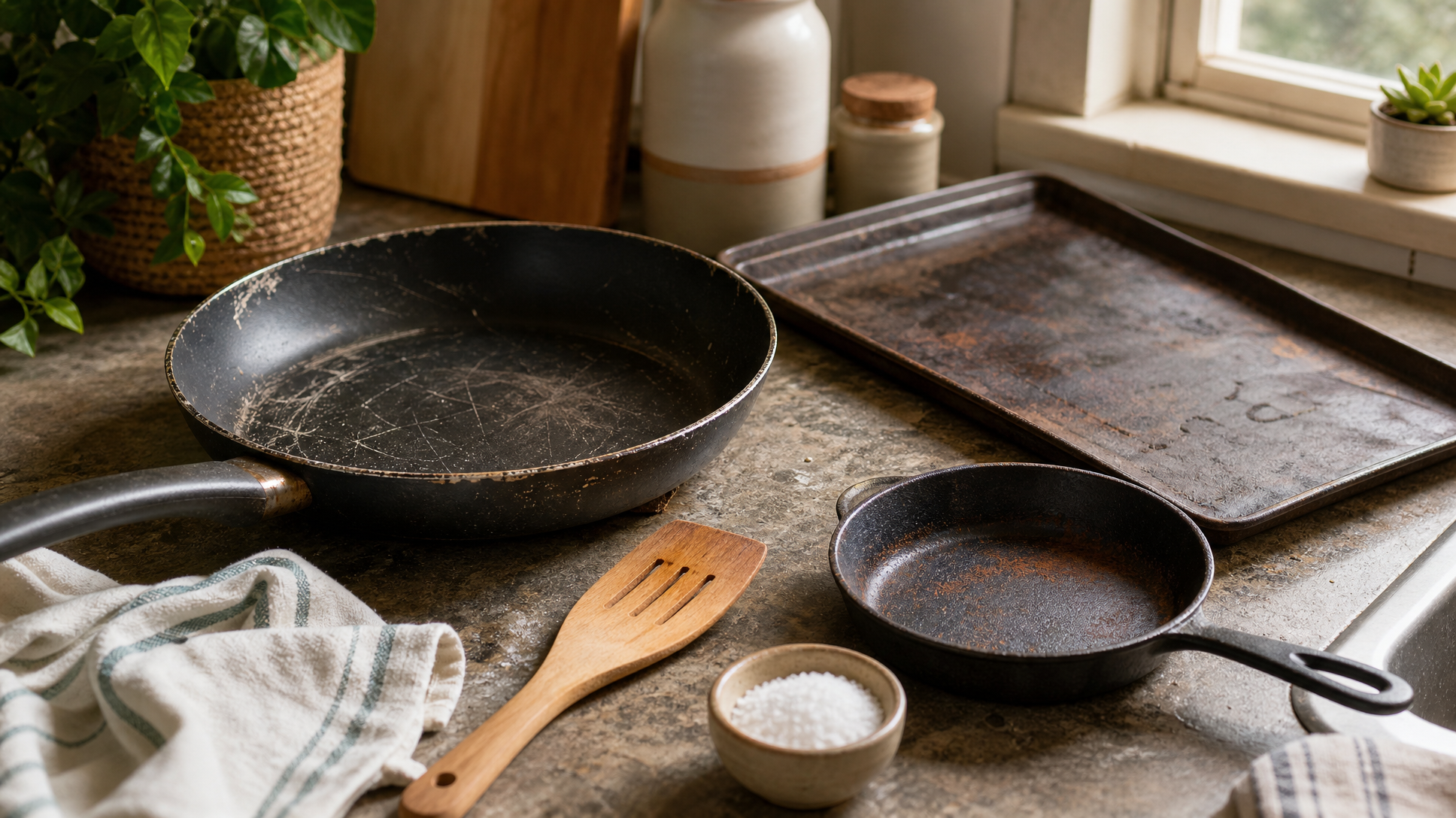
- Look for warping, cracking, persistent rust, or flaking nonstick coatings.
- Cast iron or carbon steel pans that stick regularly may need re-seasoning or replacement.
- Copper pans with damaged linings require professional repair or replacement.
5. Recommended Cookware Brands: Quality and Value
- All-Clad: Premium stainless steel and copper-core cookware known for professional quality.
- Calphalon: Reliable hard-anodized and stainless steel pieces at various price points.
- Le Creuset: Iconic enameled cast iron with vibrant colors and oven-to-table versatility.
- Lodge: Affordable, durable cast iron classics.
- GreenPan: PFAS-free ceramic nonstick cookware focusing on health and safety.
- Caraway: Stylish, non-toxic ceramic-coated sets with modern designs.
- Misen: Emerging brand offering affordable stainless and carbon steel products.
Many enthusiasts recommend building a collection of versatile individual pieces instead of full sets. Be cautious of trendy brands with inconsistent reports like HexClad and Our Place. Don't overlook thrift stores for gems like vintage cast iron cookware.
6. Conclusion: Making Smart Cookware Decisions for Your Kitchen
Success in cookware selection hinges on matching material and design with your personal cooking style and needs. Avoid one-size-fits-all sets unless they truly fit your habits. Building your collection one trusted, quality piece at a time leads to lasting satisfaction and better cooking results.
Choose wisely, care properly, and enjoy a kitchen filled with tools that enhance both performance and joy for years to come.
FAQ
What is the best cookware material for induction cooktops?
Stainless steel (with magnetic core), cast iron, and carbon steel are naturally induction-compatible due to their iron content. Hard-anodized aluminum and copper require special magnetic bases to work on induction.
How often should cast iron cookware be seasoned?
Regular seasoning is recommended, especially after deep cleaning. Applying a thin coat of oil and gently heating the pan after each wash helps maintain the nonstick surface and prevent rust.
Can I put stainless steel cookware in the dishwasher?
Yes, most stainless steel cookware is dishwasher safe. However, hand washing preserves the finish and prevents discoloration.
Are ceramic nonstick coatings healthier than traditional PTFE?
Ceramic coatings are free of PFAS chemicals, making them a popular choice for health-conscious cooks. However, they tend to be less durable and require gentle care compared to PTFE coatings.
Is it better to buy a cookware set or individual pieces?
Individual pieces let you customize your kitchen to your cooking style, often resulting in less wasted space and longer-lasting quality. Sets can be more cost-effective initially but may include items you rarely use.
Start your cookware journey with confidence by exploring trusted brands and understanding your cooking needs. Happy cooking!