Cart
0

Eco-Friendly Kitchenware and Sustainable Kitchen Practices for a Healthier Home
Making smarter, sustainable choices in kitchenware and habits is essential for your health and the planet. This guide reveals how to select non-toxic cookware, reduce waste, save energy, and maintain a greener kitchen that benefits both your family and the environment
Key Takeaways
- Traditional nonstick cookware often contains harmful PFAS chemicals linked to serious health risks.
- Safe alternatives include ceramic, stainless steel, and cast iron cookware with proper care to extend their longevity.
- Sustainable kitchenware like bamboo utensils, reusable containers, and zero-waste tools help reduce plastic waste.
- Adopting zero-waste habits and energy-efficient appliances lowers your carbon footprint and utility bills.
- Plant-based cleaning products keep your kitchen safe and environmentally friendly without harsh chemicals.
- Gradual upgrades and secondhand shopping make eco-friendly kitchens affordable and accessible.
Table of Contents
- Introduction: Why Choose Eco-Friendly Kitchenware?
- Health Risks of Traditional Cookware and Why PFAS-Free Alternatives Matter
- Sustainable Kitchenware: Materials and Tools that Reduce Environmental Impact
- Waste Reduction in the Kitchen: Simple Practices for Zero Waste Living
- Energy Efficiency in the Kitchen: Cookware and Appliances That Save Energy
- Eco-Friendly Cleaning Products: Safe and Sustainable Choices
- Practical Tips for Maintaining Eco-Friendly Cookware
- Making Eco-Friendly Kitchens Accessible: Balancing Cost and Sustainability
- Conclusion: Transform Your Kitchen Into a Healthier, Greener Space
- FAQ
1. Introduction: Why Choose Eco-Friendly Kitchenware?
Making greener, healthier choices in your kitchen is no longer optional—it’s essential. Conventional cookware often contains hazardous chemicals like PFAS, PFOA, lead, or aluminum, which can leach into your food and threaten long-term health. By switching to sustainable materials and lowering waste, you protect your family and the planet. This guide shares practical, trusted advice whether you're just starting or looking to improve your eco-friendly kitchen.
2. Health Risks of Traditional Cookware and Why PFAS-Free Alternatives Matter
Many popular nonstick pans use coatings made from PFAS, including PTFE (Teflon) and PFOA—chemicals linked to hormone disruption, thyroid disorders, liver and kidney damage, fertility issues, weakened immunity, and increased cancer risk. These “forever chemicals” don’t break down and emit toxic fumes under high heat or damage.
Choosing cookware that’s both PFAS- and PFOA-free is a vital step to safeguard your health.
Safe and Sustainable Cookware Materials
- Ceramic nonstick: Made from sand-based coatings like Thermolon™, ceramic cookware offers toxin-free cooking and withstands high heat. Confirm quality and PFAS-free certification before purchasing.
- Stainless steel: Chemical-free and durable, stainless steel is versatile though it lacks nonstick properties and requires practice to cook and clean properly.
- Cast iron: Durable with excellent heat retention and natural nonstick seasoning. It even enriches your diet with iron but needs careful maintenance to avoid rust.
What to Watch For
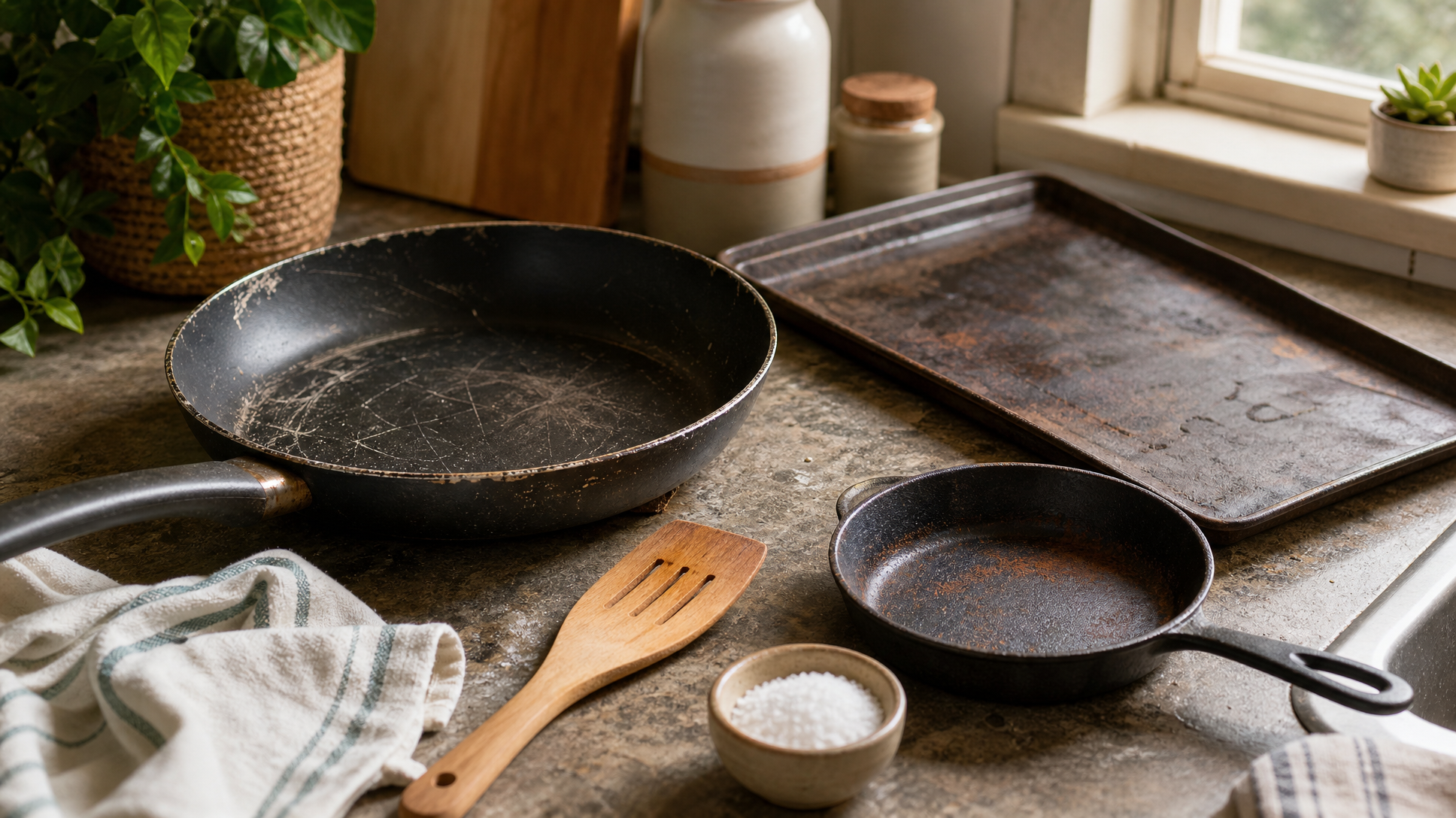
Labels aren’t always clear—some “PFOA-free” pans still contain PTFE or other PFAS chemicals. Always ensure cookware is labeled both PFAS- and PTFE-free and avoid any with damaged or flaking surfaces.
| Material | Key Benefits | Potential Drawbacks |
|---|---|---|
| Ceramic | Non-toxic, heat-safe, chemical-free, easy food release | May wear down over time; verify genuine PFAS-free quality |
| Stainless Steel | Extremely durable, no chemical coatings | Less nonstick; requires cooking skill and cleaning care |
| Cast Iron | Toxin-free, excellent heat retention, adds dietary iron | Requires upkeep; heavy; can rust if neglected |
Safe cookware is the foundation of a healthier kitchen. Explore the benefits of PFAS-free options for your home today.
3. Sustainable Kitchenware: Materials and Tools that Reduce Environmental Impact
Eco-conscious kitchens extend beyond pots and pans. Choosing sustainable tools lowers waste, cuts plastic use, and encourages responsible production.
Eco-Friendly Kitchenware Materials
- Bamboo utensils and cutting boards: Renewable, fast-growing, naturally antimicrobial, and biodegradable. Upcycled options like ChopValue’s boards transform used chopsticks into stylish tools.
- Reusable glass or stainless steel storage containers: Keep food fresh without plastic waste.
- Silicone food covers: Stretchable, washable alternatives to cling film, such as Food Huggers, reduce single-use plastics.
- Beeswax wraps: Biodegradable and washable fabric wraps that replace plastic foil for leftovers and snacks.
Zero-Waste Kitchen Tools
- Swedish dishcloths: Made from cotton-cellulose blends, these are biodegradable and replace many rolls of paper towels.
- Reusable straws: Bamboo or stainless steel straws eliminate single-use plastics.
- Indoor compost bins: Worm-based vermicomposting systems naturally break down food scraps, perfect for small spaces.
Opt for tools packaged in recyclable or compostable materials whenever possible. Choosing eco-conscious kitchen gear is not just functional—it’s a vote for sustainability.
Explore non-toxic, reusable alternatives to start upgrading your kitchen sustainably.
4. Waste Reduction in the Kitchen: Simple Practices for Zero Waste Living
A zero-waste kitchen begins with mindful daily habits, turning small changes into significant environmental impact.
Key Waste Reduction Strategies
- Replace disposable wraps with beeswax wraps or silicone lids to eliminate plastic and foil use.
- Compost food scraps using countertop bins or worm composters—even in tight spaces.
- Refill cleaning essentials like dishwasher tablets and dish soap with plant-based brands such as Blueland and Meliora.
- Choose breathable mesh or cotton produce bags instead of plastic ones at grocery stores.
- Use multi-use cleaning cloths like Swedish dishcloths alongside reusable straws to cut daily waste.
By taking one step at a time, you create a cleaner home and a healthier planet.
Find zero-waste product recommendations and ideas for sustainable living.
5. Energy Efficiency in the Kitchen: Cookware and Appliances That Save Energy
Energy-efficient kitchenware and appliances cut costs, save time, and reduce your carbon footprint.
Energy-Saving Cookware Choices
- Cast iron and Dutch ovens: Excellent heat retention means cooking on lower heat, conserving energy.
- Pressure cookers: Shorten cooking time drastically, saving fuel and preserving nutrients.
- Stainless steel pans: Quick, even heating reduces wasted energy.
Energy-Efficient Appliances
- Induction cooktops: Heat cookware directly with magnets, minimizing energy loss and cooking faster.
- ENERGY STAR certified appliances: Fridges, dishwashers, and ovens meeting strict efficiency standards reduce electricity use.
Combining non-toxic cookware with energy-smart appliances fosters a sustainable home that saves money and the environment.
Learn how cookware affects energy usage and make the most efficient choices.
6. Eco-Friendly Cleaning Products: Safe and Sustainable Choices
Avoid harsh chemicals that leave residues or pollute waterways by switching to plant-based, non-toxic products designed for eco-friendly kitchens.
- Blueland dishwasher tablets: Refillable packaging with plant-derived ingredients.
- Meliora castile dish soap: Simple formulations in recyclable bottles.
- Bon Ami powder cleanser: Only five biodegradable ingredients, free of synthetic additives.
Handle green cookware gently—use mild cleaners and soft sponges, hand wash promptly after use, and avoid abrasive scrubbers that can damage finishes or seasoning.
Browse plant-based cleaning options to keep your kitchen pristine and safe.
7. Practical Tips for Maintaining Eco-Friendly Cookware
Your sustainable cookware lasts longer with a little care, ensuring less waste and more value.
- Cast iron: Maintain seasoning by regular oiling and baking. Avoid soaking; dry thoroughly to prevent rust.
- Ceramic cookware: Clean with soft sponges and mild detergents. Let cool completely before washing to avoid cracking from thermal shock.
- Stainless steel: Preheat pans before adding oil and use specialized cleaners for tough stains or buildup.
- General advice: Prevent overheating pans and stack with protective liners to avoid scratches.
Proper maintenance protects your investment and keeps your environmental impact low.
More tips for extending cookware life are available to help you care with confidence.
8. Making Eco-Friendly Kitchens Accessible: Balancing Cost and Sustainability
Sustainable kitchens don’t have to be costly. Though upfront prices can be higher, long-term benefits offset initial spending.
- Shop secondhand: Cast iron and stainless steel often appear in thrift stores or online in excellent condition.
- Upgrade gradually: Replace your most-used or hazardous items first to stretch your budget.
- DIY cleaning: Homemade plant-based cleaners are economical and safe.
- Buy fewer, better items: Quality products lasting years beat frequent inexpensive replacements.
Everyone deserves a safe, sustainable kitchen—no perfection required. Start mindful and build green at your own pace.
9. Conclusion: Transform Your Kitchen Into a Healthier, Greener Space
An eco-friendly kitchen delivers far-reaching benefits. By choosing PFAS-free cookware, sustainable tools, and energy-efficient appliances, you reduce harmful chemicals, waste, and energy use. Supporting these choices with plant-based cleaners and smart maintenance keeps your kitchen safe, sustainable, and durable.
From small steps to full makeovers, every greener choice fosters health, sustainability, and peace of mind for you and your family.
Start where you are—and grow your greener kitchen from there.
FAQ
How can I tell if my cookware is truly PFAS-free?
Look for cookware explicitly labeled as PFAS-, PFOA-, and PTFE-free. Check manufacturer certifications and trusted reviews. Avoid any pans with flaking or damaged coatings, and when in doubt, choose ceramic, stainless steel, or cast iron known for non-toxic properties.
What are the main benefits of cast iron cookware?
Cast iron offers excellent heat retention, becomes naturally nonstick with seasoning, and can add dietary iron to your meals. It is durable but requires proper care to avoid rust and maintain seasoning.
Are sustainable kitchen tools more expensive?
Some sustainable tools may have a higher upfront cost; however, their durability, reusability, and environmental benefits often provide better value over time. Shopping secondhand or gradually upgrading can make them more affordable.
Can I use eco-friendly cookware on induction cooktops?
Yes! Stainless steel and cast iron cookware are compatible with induction cooktops and work efficiently for energy-saving cooking.
What are the best cleaning products for eco-friendly kitchens?
Plant-based, biodegradable cleaners like Blueland dishwasher tablets, Meliora castile dish soap, and Bon Ami powder cleanser are excellent choices. They avoid harsh chemicals and plastic waste, keeping your kitchen safe and clean.