Cart
0
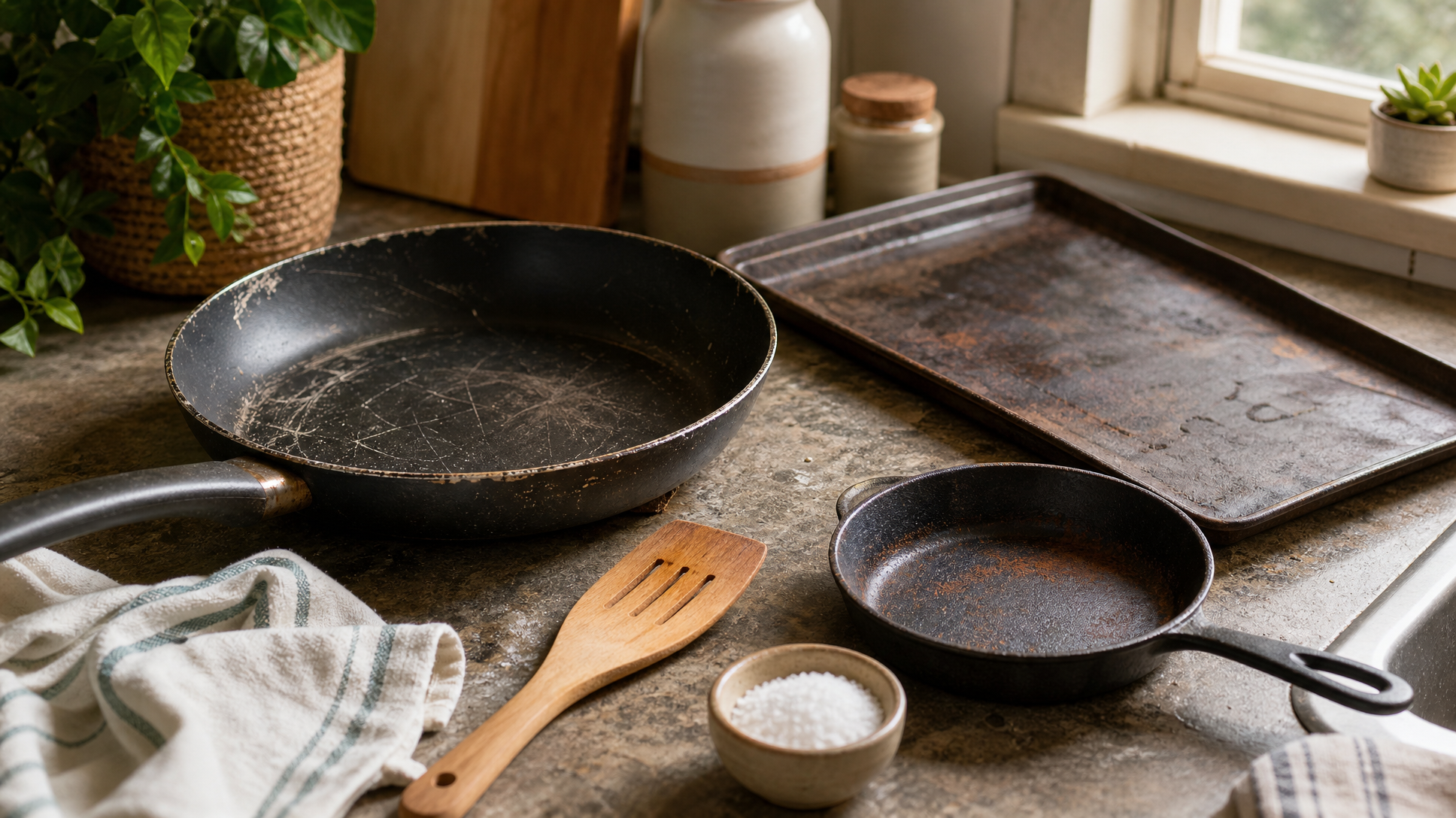
That nonstick pan you love? There's a good chance you're the one scratching it. Not on purpose — just by reaching for the wrong spatula out of habit. Most home cooks never think twice about utensil material until the coating starts flaking, and by then, the damage is done.
So let's settle this properly. Bamboo, silicone, and metal each have a real place in the kitchen — and a few places they absolutely don't belong. Here's how to think about it.
Metal Utensils: Powerful, But Unforgiving
Metal is the workhorse of professional kitchens for a reason. Stainless steel spatulas and tongs are incredibly durable, handle high heat without warping, and can scrape a cast iron pan or a stainless steel skillet without any hesitation. If you're searing a steak or deglazing a pan, metal is doing the job right.
The problem is nonstick and ceramic cookware. Metal edges — even supposedly smooth ones — are hard enough to scratch through the coating over time. One aggressive flip and you've compromised the surface. If your kitchen runs mostly on nonstick pans, metal utensils are a liability, not an asset.
Best for: Cast iron, stainless steel, and carbon steel cookware. High-heat cooking where precision scraping matters.
Keep away from: Nonstick, ceramic, and enameled cookware.
Silicone Utensils: The Safe Bet That Has One Weakness
Silicone became the go-to recommendation for nonstick pans because it's genuinely gentle — flexible enough to hug the curve of a pan without scratching, and rated to handle high cooking temperatures. It's also easy to clean and doesn't absorb odors the way wood can.
Where silicone falls short is feel. The flexibility that makes it safe can also make it floppy in the wrong moment — trying to flip a delicate fish fillet with a bendy silicone spatula is an exercise in frustration. Quality varies enormously too; cheap silicone can feel hollow and imprecise, and some lower-grade versions have a plastic-y smell when they first heat up.
Best for: Nonstick and ceramic pans, baking, folding batters, anything where gentleness is the priority.
Watch out for: Very cheap silicone — look for food-grade silicone and check that the handle is sturdy even if the head flexes.
Bamboo Utensils: The One Most People Underestimate
Bamboo sits in a genuinely useful middle ground that doesn't get enough credit. It's firm enough to actually move food around — no flopping, no bending when you need resistance — but it won't scratch nonstick or ceramic surfaces the way metal will. That combination of rigidity and gentleness is harder to find than it sounds.
Bamboo is also naturally lightweight, which matters more than people expect. Spend an hour cooking a big meal and a heavy utensil gets old fast. And because bamboo is one of the fastest-growing plants on earth, it's a genuinely sustainable material — not just a marketing claim.
The honest trade-off: bamboo needs a little more care than metal or silicone. It shouldn't soak in water for extended periods, and it's not dishwasher-friendly if you want it to last. A quick hand wash and occasional oiling keeps it in good shape.
Best for: Nonstick, ceramic, and enameled cookware. Everyday stirring, sautéing, and serving. Cooks who want something that feels solid without being aggressive.
Not ideal for: Anyone who puts everything in the dishwasher and doesn't want to think about it.
So Which Should You Actually Buy?
The honest answer is that most kitchens benefit from having more than one material — but if you had to pick a primary set, the answer depends almost entirely on what cookware you use most.
If you cook on nonstick or ceramic pans the majority of the time, metal utensils are working against you. Silicone is safe, but bamboo gives you more control and a better feel in your hand. If you're running a cast iron or stainless steel setup, metal is your friend and bamboo is a nice backup for gentler tasks.
Where bamboo really earns its place is in the everyday home kitchen — the kind where one pan does most of the work and you want a utensil set that handles everything from scrambled eggs to pasta without drama.
A Bamboo Set Worth Actually Using (and Displaying)
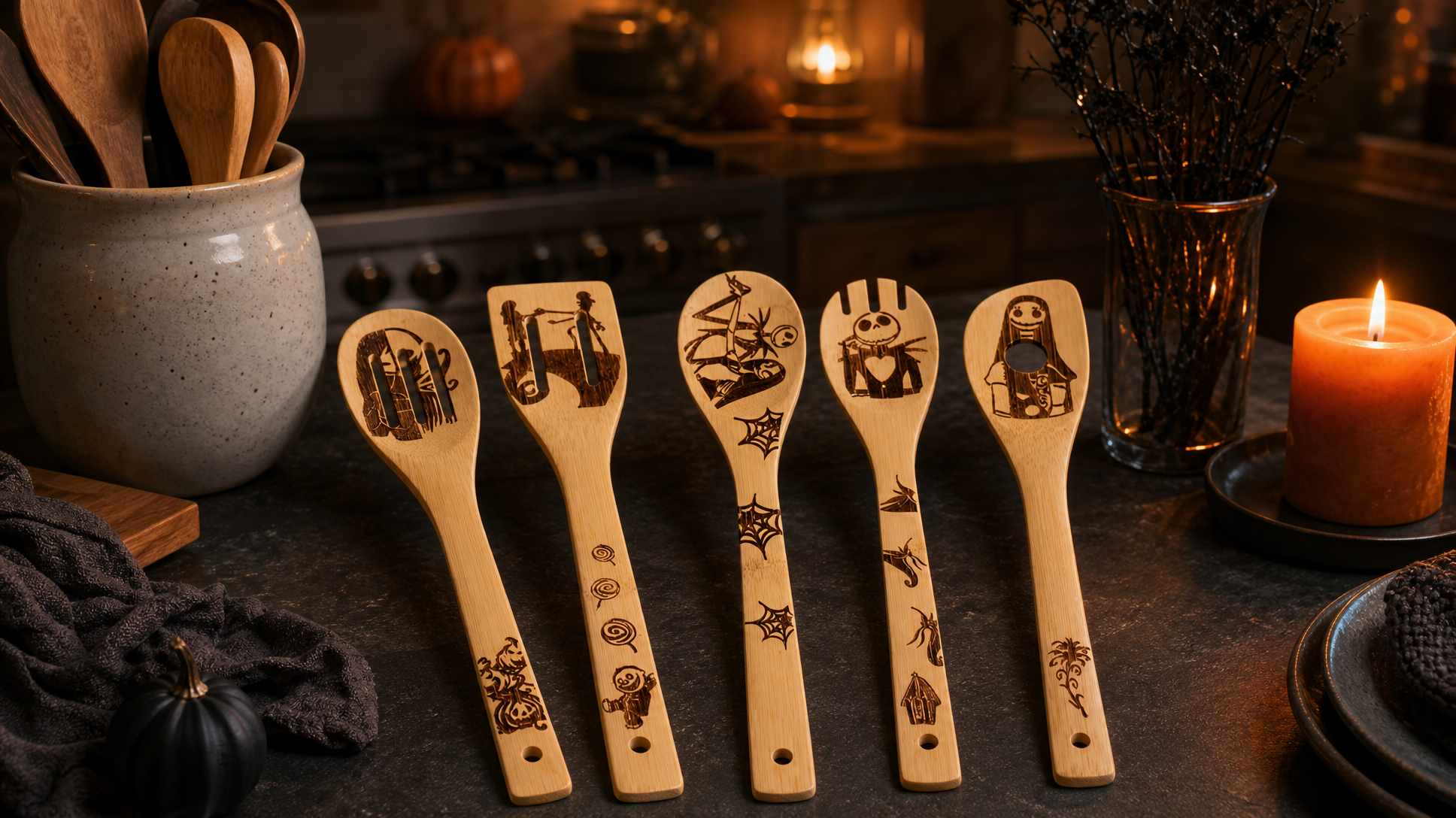
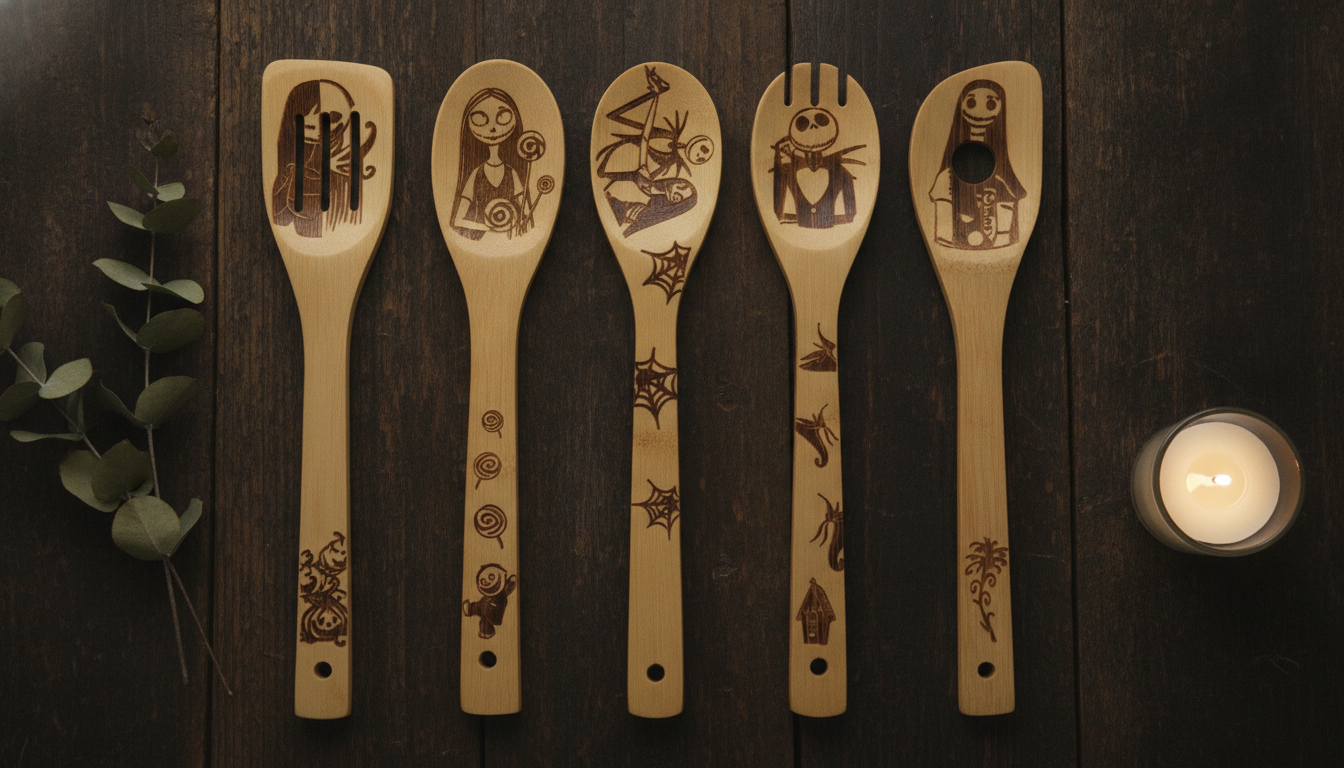
Most bamboo utensils look like bamboo utensils — perfectly functional, completely forgettable. The Nightmare Before Christmas bamboo utensil set at Homenkitchenshop takes a different approach. It's a five-piece set — slotted spatula, solid spoon, slotted spoon, fork, and spatula — each one laser-engraved with characters from the film: Jack Skellington, Sally, Oogie Boogie, Zero, spider webs, and the rest of the Halloween Town crew burned into the handles and bowls with real detail.
The engravings aren't stickers or paint — they're pyrography, meaning the designs are part of the wood itself. They won't peel, fade, or wash off. The bamboo is heat-resistant and gentle on nonstick surfaces, so these are actual cooking tools, not just display pieces (though plenty of buyers hang them on the wall and call it kitchen decor, which is also a completely valid choice).
If you're outfitting a new kitchen and want something with personality — or if you're shopping for someone who quotes the movie at dinner — this set does something most kitchenware can't: it's useful and it's a conversation starter. If you're building out your kitchen essentials from scratch, our practical new-home checklist covers what else belongs in that first round of purchases.
You can browse the full set — along with other baking and cooking supplies — at Homenkitchenshop. If you cook on nonstick or ceramic pans and your current utensils are metal, this is an easy, genuinely worthwhile upgrade.
Frequently Asked Questions
Are bamboo utensils safe to use on nonstick pans?
Yes — bamboo is one of the better choices for nonstick and ceramic cookware. It's firm enough to move food around effectively but won't scratch or damage the coating the way metal utensils can. Just avoid anything with rough or splintered edges, and you're fine.
Can I put bamboo utensils in the dishwasher?
It's not recommended. The heat and prolonged moisture in a dishwasher can cause bamboo to crack, warp, or splinter over time. Hand washing with warm soapy water and drying promptly is the way to go. Occasional oiling with food-safe mineral oil or coconut oil helps keep them in good condition longer.
Will the Nightmare Before Christmas engravings wear off with regular use?
The designs are laser-engraved directly into the bamboo using a pyrography process — they're burned into the wood itself, not printed or painted on top. That means they won't peel, chip, or fade with normal washing and use the way a surface print would.
Is this bamboo utensil set a good gift for someone who isn't a big cook?
Genuinely, yes. A lot of buyers use the set as kitchen decor — hanging the utensils on a pegboard or displaying them in a crock — rather than cooking with them daily. For a Nightmare Before Christmas fan, the engravings are detailed enough that the set works as a display piece on its own. That said, they're fully functional cooking tools, so there's no reason not to use them.