Cart
0
You've probably done it. Slid a plate into the microwave without checking the bottom, or assumed that because something survived the dishwasher it could handle the oven. Most of us treat those little symbols on dinnerware as a single green light — safe is safe, right?
Not quite. Microwave safe, dishwasher safe, and oven safe are three completely different ratings, and confusing them is how plates crack, glazes cloud, and a perfectly good set gets ruined in six months. Here's what each label actually means, and how to match it to the way you actually cook and eat.
Microwave Safe — The Most Misunderstood Label
Microwave safe means the material won't absorb microwave energy in a way that damages it or leaches into your food. It does not mean the dish stays cool, heats evenly, or is safe in any other appliance.
The most important thing to understand: microwaves heat water molecules. A dish that's dense, porous, or has metallic elements in its glaze can absorb that energy and get dangerously hot — or worse, crack from the inside out. Metallic trim (gold, silver rims) is a hard no, no matter what the rest of the dish is made of.
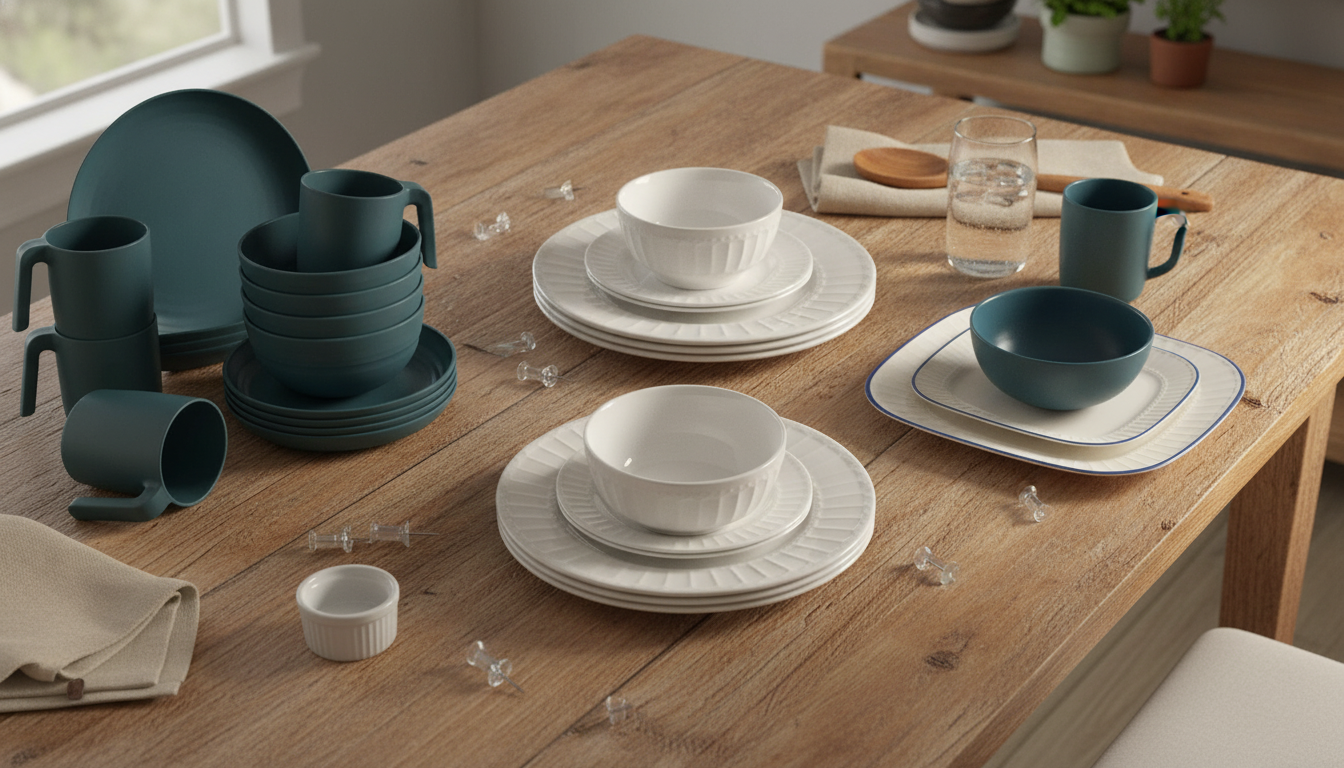
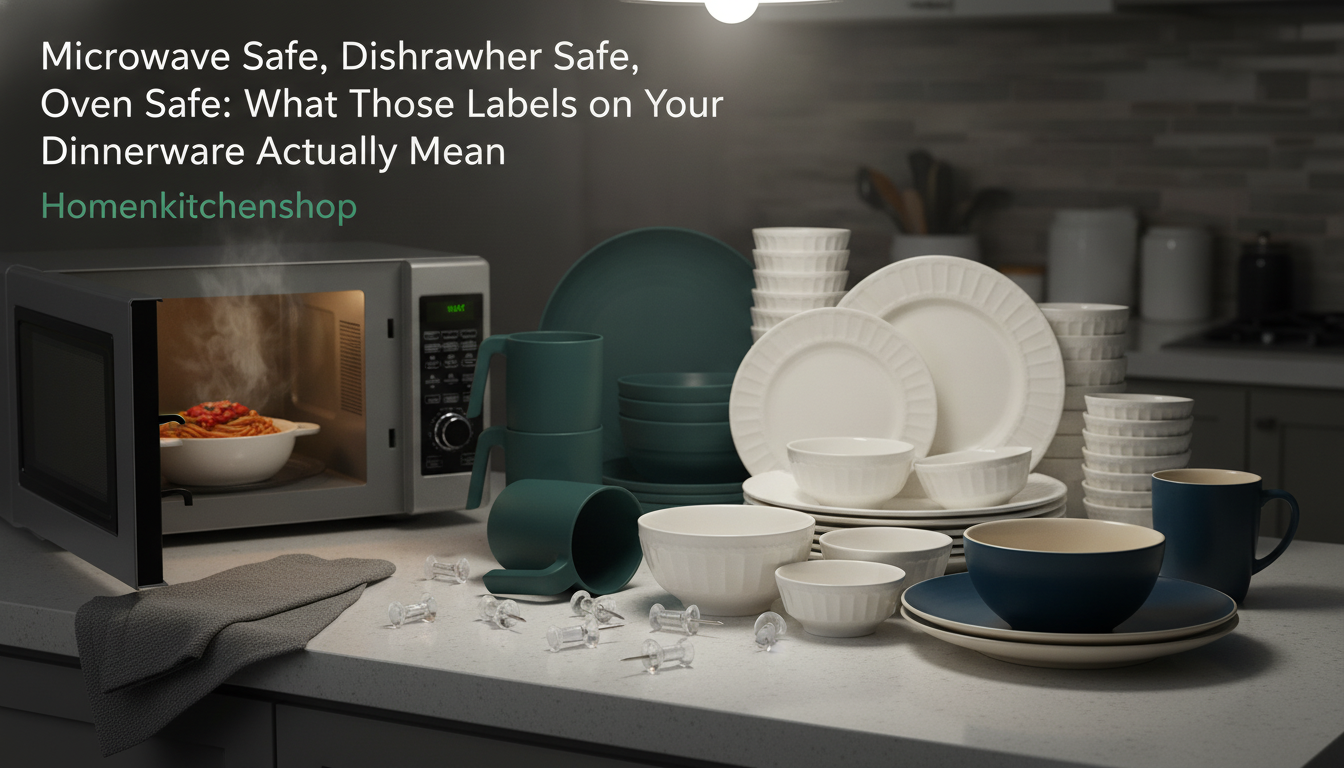
Polypropylene is one of the materials most reliably rated microwave safe. The Kyraton 16-Piece Unbreakable Polypropylene Dinnerware Set in Dark Green is a good example of where this label genuinely earns its keep. The matte dark green pieces — plates, bowls, and mugs — are made from polypropylene plastic, which doesn't absorb microwave energy and won't crack or warp under normal reheating. The set is also labeled microwave safe by the manufacturer, which matters.
One honest caveat: polypropylene is for reheating, not prolonged high-heat cooking. Running your microwave on high for 20 minutes with a fatty dish is a different situation than warming up last night's soup. Use common sense about duration and wattage.
And air fryers? Air fryers use convection heat — they're essentially small ovens. A microwave-safe label tells you nothing about air fryer safety. Keep polypropylene and most plastics well away from them.
Dishwasher Safe — The Label That's Really About the Glaze
Dishwasher safe means the material can withstand repeated exposure to hot water, high-pressure jets, and detergent without degrading. What it's really protecting is the surface finish, not the structural integrity of the piece.
Stoneware and porcelain can both carry this label, but there's a catch: the glaze matters as much as the clay body. Hand-painted decoration, metallic accents, or delicate overglaze patterns can fade or flake off even on a "dishwasher safe" piece if you run it on a high-heat cycle repeatedly. The safest move with any decorated dinnerware is the top rack, a gentle cycle, and skipping the heated dry.
The Noritake 4-Piece Colorwave Square Place Setting in Blue shows this well. The square-shaped plates and salad plates have a cream interior with a deep teal-blue border line, while the bowl and mug are finished in that same speckled dark blue on the exterior. That two-tone glaze is what gives the set its look — and it's also what you're protecting when you choose the right dishwasher setting. Noritake rates this set as dishwasher safe, but treating the glaze gently will keep that color rich for years longer than a daily high-heat cycle would.
One thing dishwasher safe definitely doesn't mean: oven safe. The thermal shock of going from a cold dishwasher to a hot oven is one of the fastest ways to crack ceramic. These are separate ratings for a reason.
Oven Safe — The Label With the Most Fine Print
Oven safe is the most nuanced of the three. It means the material can handle dry oven heat without cracking, warping, or releasing harmful compounds — but the rating almost always comes with a temperature ceiling, and that ceiling varies widely by material.
Porcelain and stoneware tend to be the best performers here. They're fired at high temperatures during manufacturing, so they're already accustomed to heat. But even within ceramics, the rating depends on the specific glaze, the thickness of the piece, and whether it's going into a preheated oven or a cold one (thermal shock is a real risk either way).
The Gibson Home Zen Buffet Porcelain Dinnerware Set (Service for 8, 40 pieces) in White is the kind of set where oven use makes sense. The all-white porcelain pieces — round dinner plates, salad plates, and fluted bowls — have a clean, embossed ribbed rim that's purely decorative and contains no metallic elements, which is exactly what you want if you're planning to finish a dish in the oven or keep something warm while the rest of the meal comes together. Always check the manufacturer's stated temperature limit before using any ceramic in the oven, and never put a cold dish directly into a screaming-hot oven.
What oven safe doesn't cover: stovetop use (direct flame or electric element), broiler use unless specifically stated, and rapid temperature changes like going from freezer to oven.
The Material Cheat Sheet
If you're shopping for a set and want to know which labels to expect by material, here's the honest summary:
- Polypropylene (plastic): Usually microwave safe and dishwasher safe. Not oven safe. The Kyraton set is a strong pick if your priority is reheating convenience and durability — it's genuinely unbreakable in daily use, which matters if you have kids or a small kitchen with limited cabinet space.
- Porcelain: Often oven safe up to a manufacturer-stated limit, usually dishwasher safe. Microwave safe as long as there's no metallic trim. The Gibson Zen Buffet set, with its all-white undecorated surface, is the most versatile in the oven.
- Stoneware (like Noritake Colorwave): Typically dishwasher safe and microwave safe. Oven safety depends on the specific glaze — check the product details. The two-tone glaze on the Colorwave pieces is the variable to watch.
The One Mistake Worth Avoiding
The single most common dinnerware mistake isn't putting the wrong dish in the microwave. It's buying a set based on how it looks, then discovering it doesn't fit how you actually cook — and then either babying it or accidentally wrecking it.
If you reheat everything and hate handwashing, polypropylene makes your life easier. If you cook in batches and want to go from oven to table, porcelain is your material. If you want something that photographs well at a dinner party and survives the dishwasher, stoneware with a clean glaze is the move.
None of these is wrong. They're just different tools for different kitchens. Knowing which label matters to you before you buy is the whole point.
Ready to find the set that actually fits how you cook? Browse dinnerware sets at Homenkitchenshop and find the right material for your kitchen habits.
Frequently Asked Questions
Can I put a microwave safe dish in the air fryer?
No — and this is one of the most common mix-ups. Air fryers work by circulating hot dry air, essentially functioning as a small convection oven. A microwave safe rating only tells you the material won't react to microwave energy; it says nothing about how it handles convection heat. Polypropylene and most plastics should never go in an air fryer.
Is porcelain always oven safe?
Not automatically. Most undecorated porcelain can handle oven heat up to a certain temperature, but the specific glaze, any metallic decoration, and the manufacturer's stated limit all matter. Always check the product's listed temperature ceiling, and avoid putting a cold porcelain dish directly into a very hot oven — the thermal shock can cause cracking even in otherwise oven-safe pieces.
Does dishwasher safe mean I can use any cycle?
Technically the label means the piece can survive the dishwasher, but high-heat cycles and heated dry settings will wear down glazes and surface finishes faster over time — especially on colored or decorated pieces. For longevity, top rack and a gentle or normal cycle is always the safer habit, even with officially dishwasher-safe dinnerware.
Is polypropylene dinnerware safe for everyday use?
Yes, polypropylene is a widely used food-contact plastic considered safe for everyday eating and reheating under normal conditions. It's the material behind many reusable food containers and dinnerware sets designed for durability. That said, like any material, it's best used as the manufacturer intends — for reheating and regular meals, not prolonged high-heat cooking sessions.