Cart
0
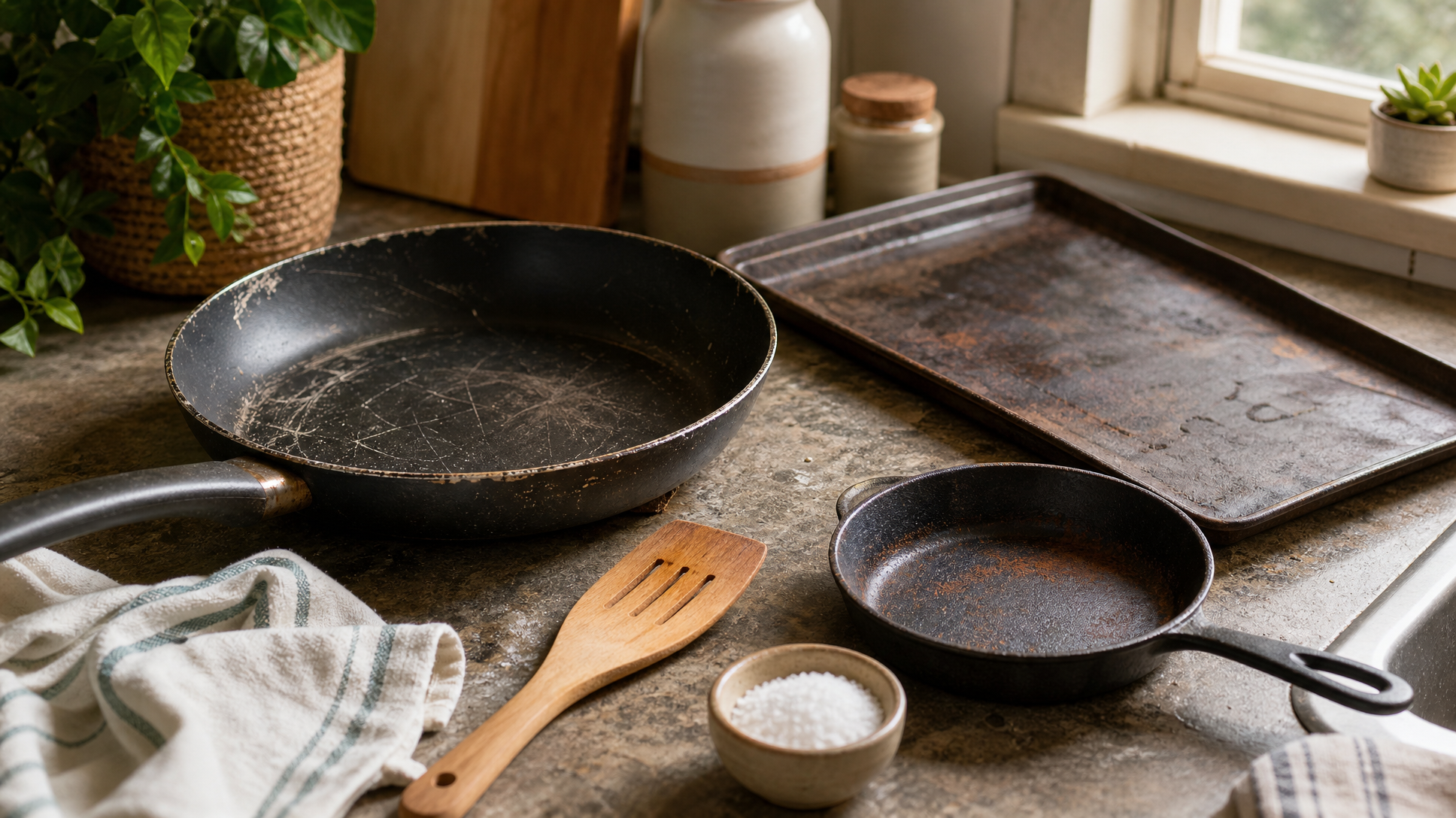
The pan you've had since college probably isn't doing you any favors
Most people don't throw away a pan because they decided to. They throw it away because something finally went obviously wrong — the handle snapped, the coating peeled into dinner, or a baking sheet buckled so badly it slid off the rack. Until that moment, there's always a reason to keep using it: it still works, mostly. It was expensive. It's familiar.
The problem is that cookware doesn't fail dramatically. It degrades gradually, and that gradual decline costs you more than you realize — in uneven cooking, in food sticking where it shouldn't, and in some cases, in what's ending up in your food. This guide is about reading those signals clearly, so you can make a decision instead of just feeling vaguely guilty every time you open the cabinet.
Nonstick Pans: The Signs Are Visible, So Trust Them
Nonstick is the category where most people are in denial the longest, because a scratched pan still looks like a pan. But the coating is the whole point — once it's compromised, you're essentially cooking on bare metal with extra steps.
Replace your nonstick pan when you see any of these:
- Flaking or peeling coating. Small dark flecks in your eggs or sauce aren't seasoning. If the coating is coming off in pieces, the pan is done. Full stop.
- Deep scratches that expose the base metal. Light surface scuffs from a spatula are cosmetic. Deep gouges that show silver or grey metal underneath mean the nonstick layer has been breached.
- Food sticking consistently. A well-maintained nonstick pan should release food easily with minimal fat. If you're scrubbing eggs off a pan that's supposed to be nonstick, the surface has lost its function.
- Warping or an uneven base. A pan that rocks on the burner heats unevenly. One side of your omelette cooks faster than the other, oil pools to one edge, and nothing comes out right. Warping usually happens from thermal shock — putting a hot pan under cold water — and it doesn't reverse.
How long should a nonstick pan last? That depends heavily on how it's used and cared for. Metal utensils, high heat, and dishwasher cycles all shorten the lifespan significantly. A pan treated gently can last several years; one that's been through the dishwasher weekly may look rough within a year or two. The coating is the honest indicator — not the age.
Cast Iron: Harder to Kill, But Not Indestructible
Cast iron has a reputation for lasting generations, and that reputation is mostly earned. But there are failure modes that even cast iron can't recover from.
Rust patches are not automatically a death sentence. Surface rust on a cast iron pan can usually be scrubbed off with steel wool, dried thoroughly, and then re-seasoned with a thin layer of oil baked in. If you've done that and the rust returns quickly and deeply, or if the rust has pitted the cooking surface, the pan may be past saving.
Cracks are the real end point. A cracked cast iron pan is a safety hazard — it can break apart under heat or when handled. Don't cook on a cracked pan, even a hairline crack. This one isn't a judgment call.
Warping is rare in cast iron but can happen from extreme temperature changes. A warped cast iron pan won't sit flat on a smooth electric or induction cooktop, which creates real cooking problems. On gas, it's less critical, but still worth noting.
If your cast iron is just sticky, dull, or has uneven seasoning, that's a maintenance issue — not a replacement issue. Re-season it and see if it comes back. Cast iron rewards patience.
Ceramic and Enamel-Coated Cookware: Watch the Surface
Ceramic-coated pans and enamel-coated cast iron (like Dutch ovens) have their own set of warning signs, and the coating is again the thing to watch.
Chips in the enamel or ceramic coating are the clearest signal. A small chip on the exterior of a Dutch oven is cosmetic. A chip on the interior cooking surface is a different matter — you're now cooking on exposed cast iron or steel, which can affect flavor and, depending on the piece, may not be what the manufacturer intended for that surface.
Heavy staining or discoloration that doesn't clean off is mostly a cosmetic issue and doesn't affect performance. But if the interior surface has become noticeably rough or pitted — not just stained — that's worth paying attention to, because a rough surface means food will stick more and cleaning becomes harder.
Crazing (fine hairline cracks across the surface that look like a crackle glaze) in ceramic coatings can eventually lead to the coating breaking down. Light crazing is common over time; extensive crazing that's getting worse is a signal the coating is failing.
Bakeware: Warping and Rust Are Your Cues
Baking sheets, cake pans, and muffin tins take a beating from repeated high heat, and they show it.
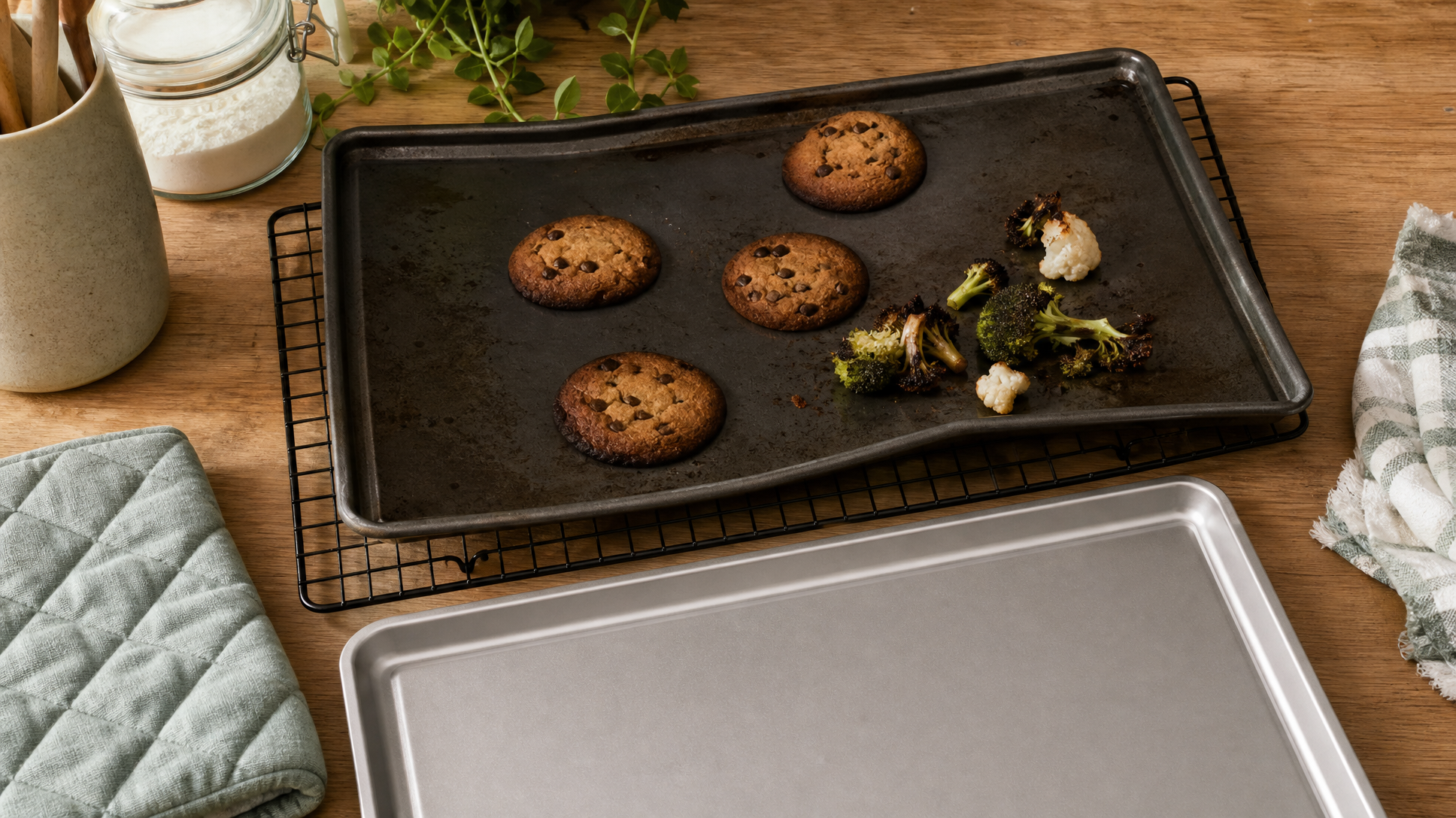
Warped baking sheets are the most common problem. You'll hear the pop when they warp in the oven, and you'll notice that cookies on one side brown faster than the other. A sheet pan that doesn't lie flat affects baking results in a real, measurable way — it's not just annoying. If your sheet pan warps every time it goes into a hot oven, it's not going to get better.
Rust on uncoated steel or aluminum bakeware is a sign that the surface has been compromised, often from being left wet or washed in a way that removed any protective coating. Light surface rust on steel can sometimes be addressed, but if rust is widespread or has pitted the surface, replace it.
Heavy, baked-on residue that won't come off isn't just ugly — it can create hot spots that burn food unevenly. If you've tried soaking and scrubbing and the pan still looks like it's been through a fire, it's affecting your results.
Nonstick bakeware follows the same rules as nonstick pans: flaking, peeling, or heavily scratched coating means it's time to go.
A Quick Decision Framework
If you're standing in front of your cabinet trying to decide right now, here's a simple way to think about it:
- Is the cooking surface compromised? (Peeling, chipping, cracking, deep scratches exposing base metal) → Replace it.
- Is it structurally unsafe? (Cracked cast iron, broken handle, severe warping) → Replace it.
- Is it just dirty, dull, or lightly worn? → Try cleaning, re-seasoning, or re-conditioning first.
- Is food sticking on a pan that shouldn't stick? → That's a performance failure. Replace it if cleaning and re-seasoning don't fix it.
The goal isn't to throw things away unnecessarily. It's to cook on surfaces that are actually doing their job.
One More Thing Worth Mentioning
If you moved into a new place recently and inherited someone else's cookware, or you're building out a kitchen from scratch, the practical new-home checklist on this blog covers exactly what's worth buying first — useful context for deciding which gaps in your kitchen actually need filling.
When you're ready to replace something, the bakeware and baking supplies collection at Homenkitchenshop is a solid place to start — practical picks at prices that don't require you to overthink the decision. Browse the full range at Homenkitchenshop and find a replacement that's actually built to last.
Frequently Asked Questions
Is it dangerous to keep using a nonstick pan with a scratched coating?
Light surface scratches are generally considered low risk, but a coating that is visibly flaking or peeling means pieces of it can end up in your food. At that point, most experts recommend replacing the pan rather than continuing to use it. Deep scratches that expose the base metal also mean the nonstick function is effectively gone, so the pan isn't performing its job anyway.
Can I fix a warped baking sheet, or does it have to be replaced?
Warping in thin sheet pans is usually permanent — once the metal has bent from thermal stress, it won't reliably flatten back out. Some people try bending it back by hand, but this is rarely a lasting fix and can weaken the metal further. A heavily warped pan that rocks in the oven or causes uneven baking is worth replacing.
How do I re-season cast iron at home?
Scrub off any rust or residue, rinse, and dry the pan completely — heat it briefly on the stovetop to make sure all moisture is gone. Apply a very thin layer of a high-smoke-point oil (flaxseed, vegetable, or shortening all work) to the entire surface, inside and out, then wipe off almost all of it so only a trace remains. Bake it upside down in a hot oven for about an hour, then let it cool in the oven. Repeat a few times for a stronger seasoning layer.
How often should cookware generally be replaced?
There's no single answer — it depends entirely on the material and how the piece is cared for. Nonstick pans tend to have a shorter functional lifespan than stainless steel or cast iron, which can last decades with proper care. The most honest answer is: replace a piece when its cooking surface is compromised or it's no longer performing as it should, not on a fixed schedule.