Cart
0
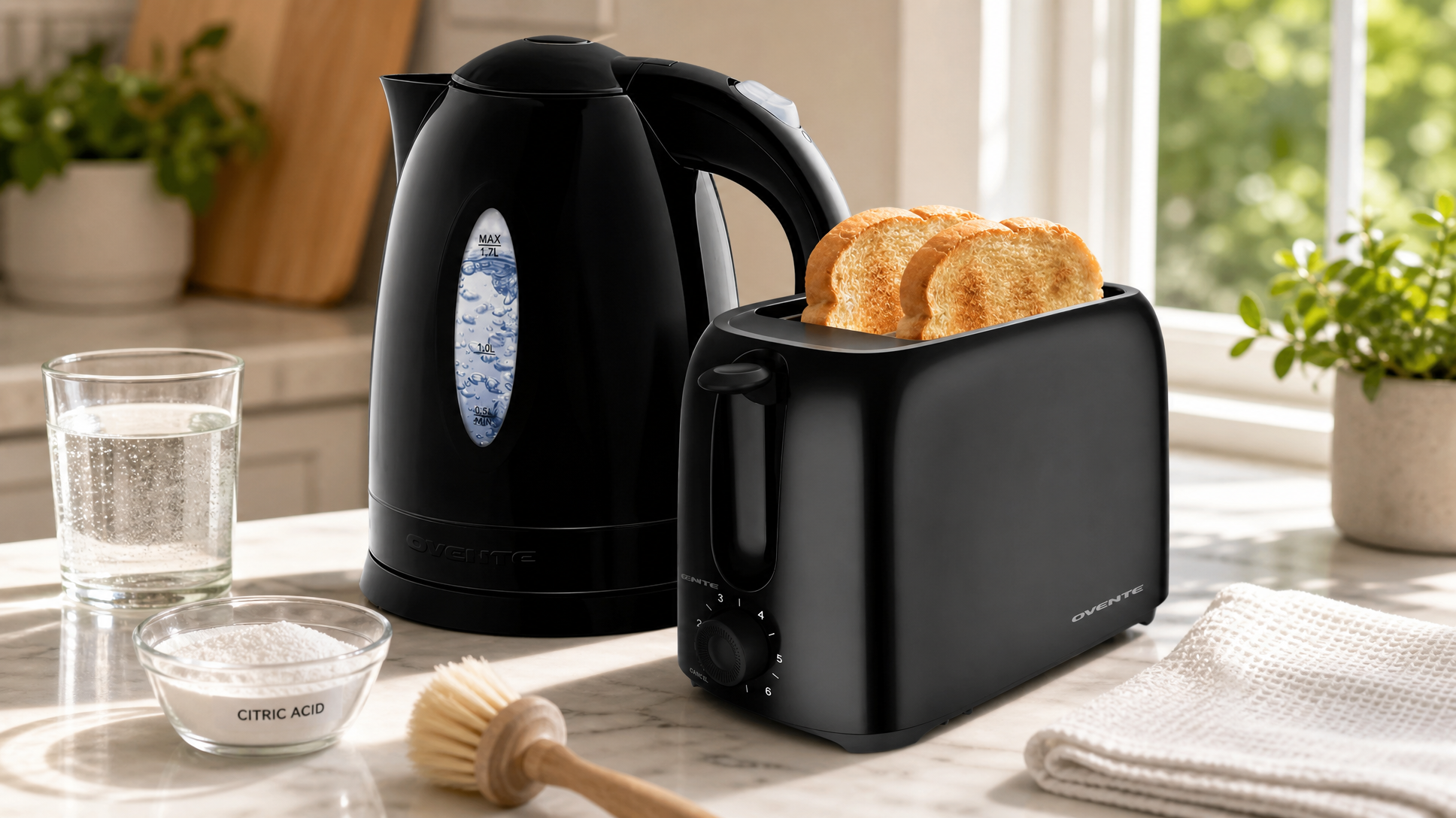
The crumb tray has been full for three weeks. The kettle has a chalky white ring inside that you've been meaning to deal with. Sound familiar? Most of us treat our countertop appliances like they're self-maintaining — until the toast starts tasting off or the kettle takes noticeably longer to boil.
The good news: the Ovente electric kettle and 2-slice toaster combo was designed with easy cleaning in mind. The kettle has a removable spout filter and a BPA-free interior, and the toaster has a removable crumb tray. That means a proper clean takes minutes, not a Sunday afternoon. Here's exactly how to do it.
Why Cleaning Actually Matters (Not Just for Hygiene)
Mineral buildup — the white, chalky residue you see inside a kettle — is limescale. It forms when hard water is repeatedly boiled and the dissolved minerals are left behind. Over time, limescale acts as an insulator on the heating element, which means the kettle has to work harder and longer to reach a boil. That's wasted energy and extra wear on the appliance.
With the toaster, it's simpler: accumulated crumbs under the heating elements can burn, smoke, and in rare cases cause a fire. A crumb-free toaster also browns bread more evenly, because there's no debris interfering with the heat distribution.
Neither problem is dramatic when you catch it early. Both become a headache when ignored for months.
Cleaning the Ovente Kettle: The Right Way
The kettle's 1.7L capacity and 1100W heating element mean it boils fast — but that speed also means mineral deposits build up faster in areas with hard tap water. Here's a simple routine that handles it.
Weekly: Rinse and Wipe
After the kettle has cooled completely, pour out any remaining water and rinse the interior with fresh water. Wipe the exterior with a damp cloth. This prevents mineral deposits from drying and hardening into a crust. The cool-touch handle makes this easy to do safely even shortly after use.
Monthly: Descale the Interior
Fill the kettle partway with a mixture of equal parts white vinegar and water. Bring it to a boil, then let the solution sit inside for about 20 to 30 minutes. Pour it out, rinse thoroughly two or three times with fresh water, and boil a full kettle of plain water once before using it again. This dissolves limescale without any harsh chemicals.
If you prefer not to use vinegar, citric acid dissolved in water works the same way and leaves no lingering smell — a small amount stirred into water, boiled, and then rinsed out does the job cleanly.
The Spout Filter: Don't Skip This Step
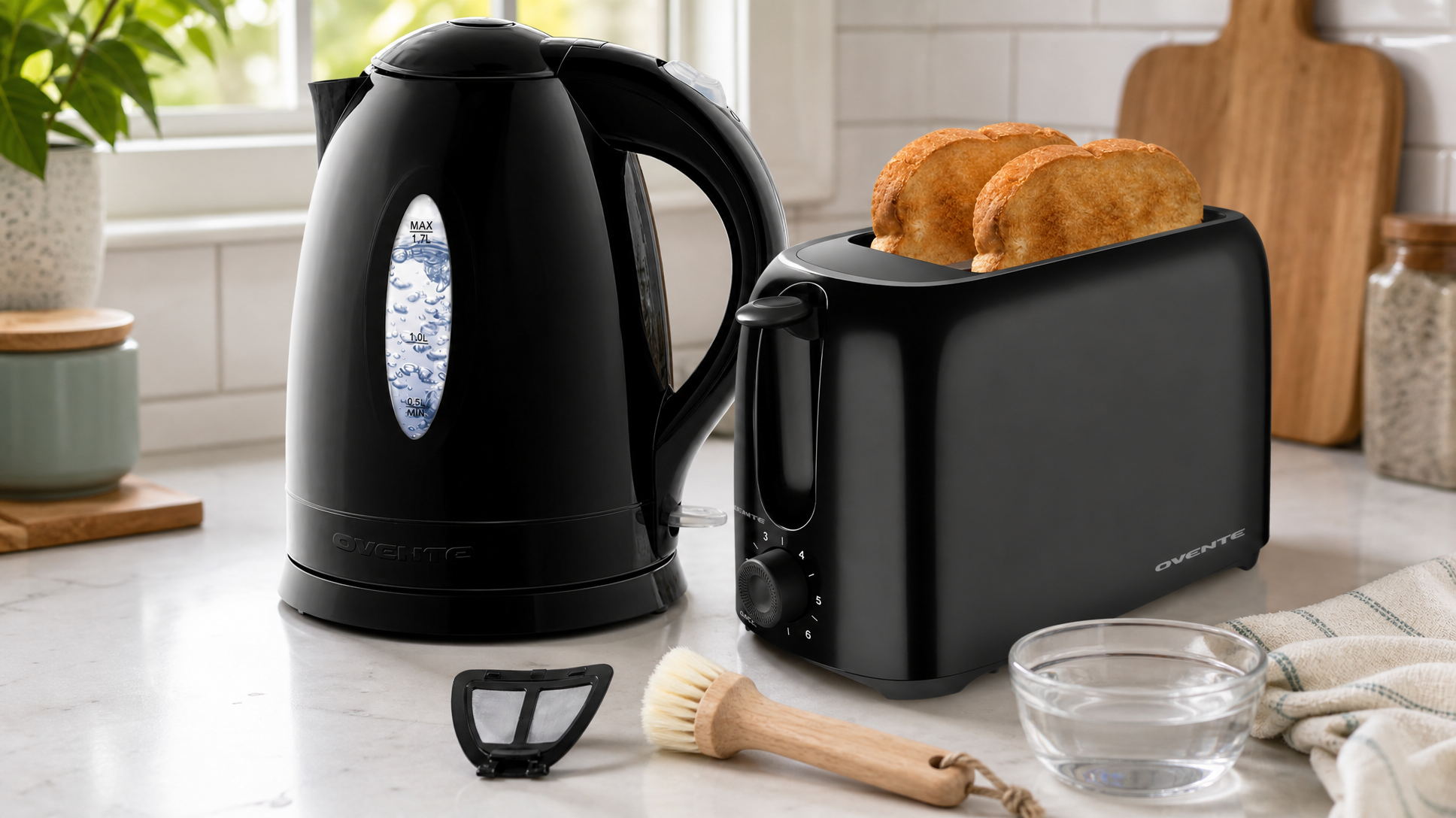
The removable spout filter is one of the Ovente kettle's most practical features, and it's the one most people forget about. It catches loose mineral flakes and debris before they end up in your cup. Remove it, rinse it under running water, and gently scrub away any buildup with a soft brush. Let it dry before reattaching. Do this whenever you descale — monthly is a good rhythm.
Cleaning the Ovente Toaster: Faster Than You Think
Toaster maintenance has a reputation for being messy. It doesn't have to be.
Weekly: Empty the Crumb Tray
Slide out the removable crumb tray from the bottom of the toaster, shake the crumbs into the bin, and wipe the tray with a dry cloth or paper towel. That's it. Thirty seconds, done. If you make toast every morning, doing this once a week keeps the crumbs from building up to the point where they start to smoke.
Monthly: Clear the Slots
Unplug the toaster first — always. Hold it over the sink or a bin and gently turn it upside down to shake out any crumbs that have collected in the slots themselves. A soft pastry brush is ideal for loosening anything stuck to the interior walls. Never use water inside the toaster or submerge it.
The Exterior
The toaster's smooth black plastic exterior wipes down easily with a slightly damp cloth. Avoid abrasive sponges — they'll dull the finish. A quick wipe every week or two keeps it looking like it belongs on your counter, not in a thrift store.
A Simple Maintenance Schedule to Actually Stick To
- Every few days: Pour out leftover water from the kettle — don't let it sit stagnant.
- Weekly: Empty the toaster crumb tray. Rinse the kettle interior.
- Monthly: Descale the kettle with vinegar or citric acid. Clean the spout filter. Clear the toaster slots and wipe both exteriors.
That's genuinely the whole routine. Neither appliance demands much — they just need you to not forget them entirely.
One More Thing: Storage and Placement
Both the kettle and toaster are compact by design, which makes them easy to tuck into a small kitchen or dorm counter without dominating the space. For longevity, keep them away from steam sources (like directly next to a stovetop) and make sure the kettle sits firmly on its cordless base after each use. The auto shut-off and boil-dry protection handle safety if you walk away mid-boil, but they work best when the appliance is clean and unobstructed.
If you're setting up a new kitchen and still figuring out what else you need beyond the basics, the practical new-home checklist is worth a read — it covers the things most people forget when stocking a kitchen for the first time.
The Bottom Line
A matching kettle and toaster set that looks good on day one can still look — and perform — just as well two or three years in. The Ovente combo makes that easy with a washable filter, a removable crumb tray, and a BPA-free interior that rinses clean. The appliances do their part. You just have to do yours, once a month.
Ready to stock up on kitchen essentials or pick up the Ovente set for yourself? Browse the full range of kitchen appliances at Homenkitchenshop and find everything you need in one place.
Frequently Asked Questions
How often should I descale my electric kettle?
Once a month is a good baseline for most households. If you live in an area with particularly hard water and use your kettle daily, you may notice limescale building up faster — in that case, descaling every two to three weeks keeps things running smoothly.
Can I put the Ovente kettle or toaster in the dishwasher?
No — neither the kettle nor the toaster should go in the dishwasher. The kettle interior should be cleaned by hand with a rinse and periodic vinegar descale. The removable spout filter can be rinsed under the tap. The toaster crumb tray wipes clean with a dry cloth, and the toaster itself should never be submerged in water.
What's the best way to remove stubborn limescale from the kettle?
If a standard vinegar soak doesn't fully clear heavy buildup, try citric acid dissolved in water — it's a stronger descaler and leaves no aftertaste. Fill the kettle partway, bring it to a boil, let it sit for 30 minutes, then rinse thoroughly and boil a full kettle of plain water before using it again. Repeat if needed.
Is it safe to leave water in the kettle overnight?
It's better not to. Stagnant water left in the kettle encourages mineral deposits to settle and dry onto the interior walls, making limescale harder to remove over time. Get into the habit of emptying any leftover water after each use — it's a small step that makes your monthly descale much easier.