Cart
0

Most cookware debates online end the same way: someone insists stainless steel is the only "serious" option, someone else swears by nonstick, and you're left no closer to knowing what to actually buy. The truth is both materials are genuinely good — just not at the same things. The right answer depends on how you actually cook, not how a food blogger says you should.
Here's a straight breakdown of where each one wins, where it falls short, and how to decide without overthinking it.
What Ceramic Nonstick Does Well
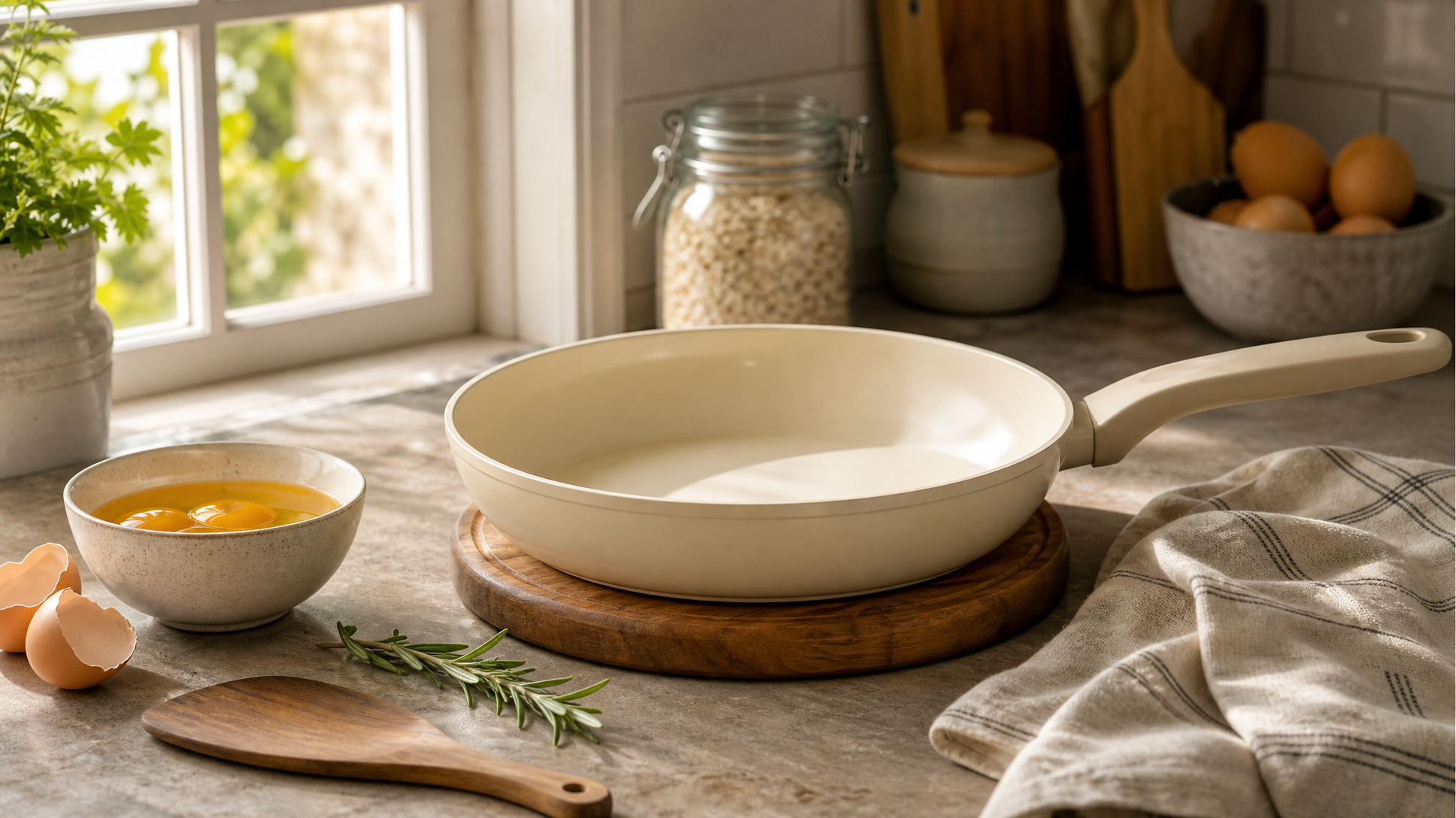
Ceramic nonstick cookware has a smooth, mineral-based coating that makes food release effortless. Eggs slide out, sauces don't stick, and cleanup is mostly a rinse and a wipe. That's not a small thing — it changes how relaxed cooking feels on a weeknight.
It also runs cooler than you might expect. Because the nonstick surface works at lower and medium heat, you don't need to crank the burner to get results. For everyday tasks like warming milk, making oatmeal, simmering a pasta sauce, or boiling water for noodles, ceramic nonstick is genuinely the easier tool. Less oil, less mess, less scrubbing.
The other underrated advantage: it's approachable. If you're not a confident cook, stainless steel can feel punishing — food sticks the moment you second-guess yourself. Ceramic nonstick forgives hesitation.
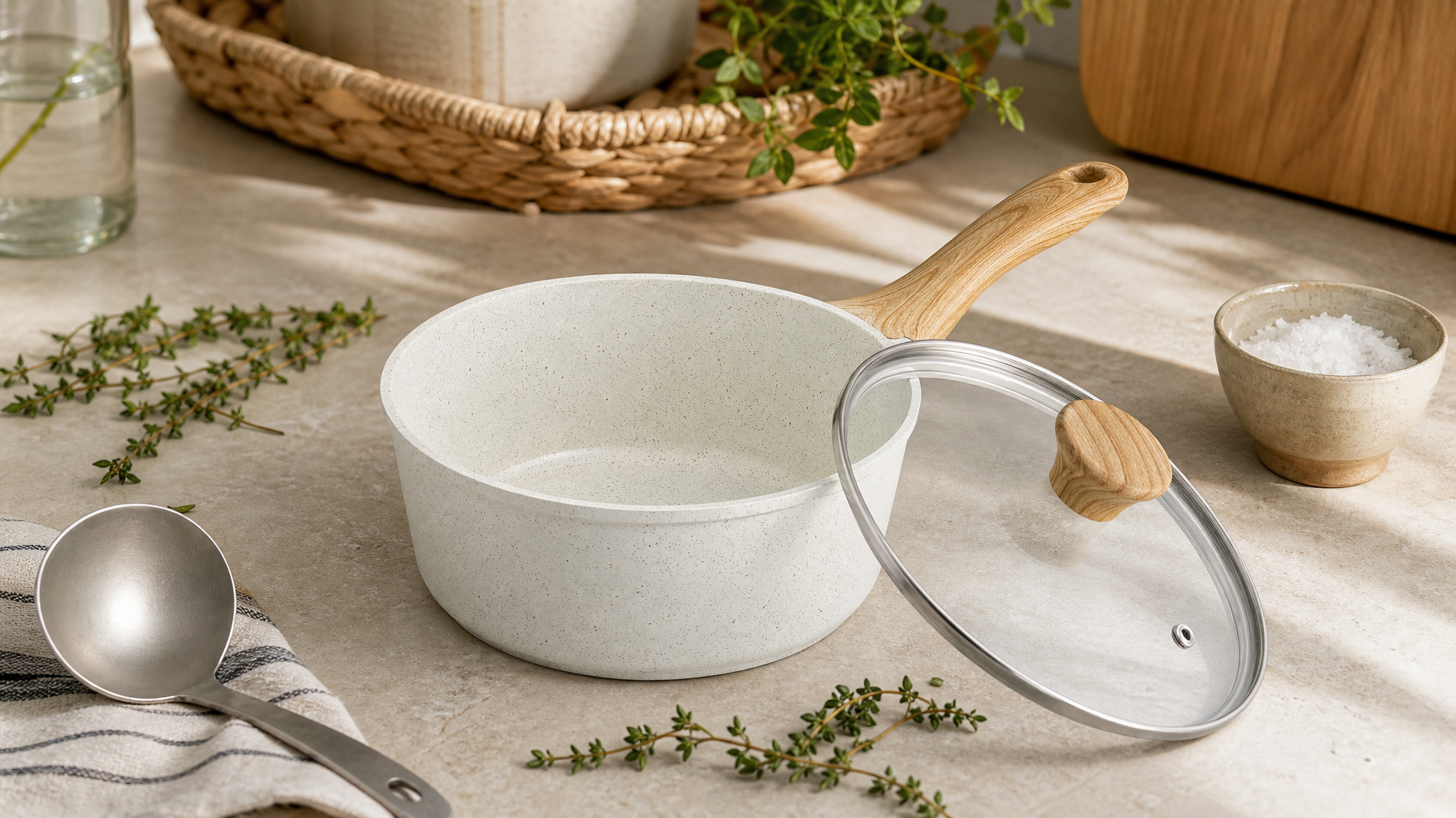
One thing worth knowing: quality matters a lot in this category. A well-made ceramic nonstick pan — one with a cast aluminum core for even heating and a coating that's free from PFOA, PTFE, PFAS, lead, and cadmium — performs very differently from a cheap one that starts flaking after a few months. The Homenkitchenshop ceramic nonstick saucepan set shown here, for example, features that kind of construction: rivet-free interior (no crevices for food to hide in), stay-cool woodgrain handles, tempered glass lids with steam vents, and a stainless steel base that works on all stovetops including induction. That combination of materials is what separates a pan that lasts from one that doesn't.
Where Ceramic Nonstick Has Limits
High heat is the main one. Ceramic coatings don't like being blasted — it degrades the surface over time. So if you want a hard sear on a steak, or you're building a fond in the pan to deglaze for a pan sauce, ceramic nonstick isn't the right tool. It's also not ideal for oven-finishing dishes at high temperatures, depending on the handle material.
Metal utensils are another no. You need silicone or wood, which is a small but real adjustment if you're used to grabbing whatever's nearby.
What Stainless Steel Does Well
Stainless steel is the workhorse of professional kitchens for a reason. It handles high heat without complaint, goes from stovetop to oven, and develops a fond — those caramelized bits stuck to the pan — that's the foundation of countless sauces and braises. If searing, browning, or deglazing is central to how you cook, stainless steel gives you results that nonstick simply can't replicate.
It's also essentially indestructible with normal use. Metal utensils, high heat, aggressive scrubbing — stainless takes it all. And because there's no coating to protect, you don't have to think twice about how you treat it.
Stainless steel is also more versatile at the extremes: very high heat for searing, and acidic ingredients like tomatoes or wine that can interact poorly with some coatings over time.
Where Stainless Steel Has Limits
It sticks. Not always, not catastrophically — but eggs, fish, and anything with sugars will bond to stainless if you don't manage heat and fat carefully. There's a real learning curve: you need to preheat the pan properly, let food release naturally rather than forcing it, and use enough oil. Once you get it, it's second nature. Until then, it can be frustrating.
Cleanup is also more work. Stuck-on food requires soaking or a bit of effort with a scrub pad. That's fine if you enjoy cooking and don't mind the process. If you're cooking after a long day and just want to eat, it's a tax you'll feel.
The Honest Side-by-Side
- Everyday sauces, soups, oatmeal, pasta water: Ceramic nonstick wins. Lower heat, easy cleanup, no babysitting required.
- Searing meat, building a fond, deglazing: Stainless steel wins. It's built for high heat and browning.
- Eggs and delicate proteins: Ceramic nonstick wins by a wide margin.
- Acidic dishes cooked long (tomato-based braises): Stainless steel is safer for extended cooking; ceramic nonstick is fine for shorter simmers.
- Oven use at high temperatures: Stainless steel wins, depending on handle construction.
- Easy cleanup: Ceramic nonstick, especially with a rivet-free interior.
- Longevity with rough handling: Stainless steel — it doesn't have a coating to wear down.
- Induction compatibility: Both can work, but check the specific pan. Quality ceramic nonstick sets with a magnetic stainless steel base handle induction fine.
So Which One Should You Actually Buy?
If you cook mostly weeknight meals — pasta, soups, sauces, grains, eggs — and you want cooking to feel easy rather than technical, ceramic nonstick is the smarter starting point. It covers the majority of what most home cooks actually make, and it makes the experience genuinely more enjoyable.
If you cook a lot of meat, enjoy technique-driven cooking, or want one pan that does everything including high-heat searing, stainless steel deserves a place in your kitchen. Ideally, you'd have both — a nonstick saucepan or skillet for everyday tasks, and a stainless steel piece for the jobs that need it.
The worst move is buying one type and expecting it to cover everything perfectly. Neither material is universal. But knowing what each one is actually built for means you stop second-guessing every purchase and start cooking with the right tool for the job.
Browse our cookware selection at Homenkitchenshop to find ceramic nonstick and other kitchen essentials that fit how you actually cook — and if you're outfitting a kitchen from scratch, the new-home kitchen checklist is a good place to start.
Frequently Asked Questions
Is ceramic nonstick actually safe to cook with?
A quality ceramic nonstick coating is free from PFOA, PTFE, PFAS, lead, and cadmium — the chemicals that raised health concerns about older nonstick pans. That said, not all ceramic coatings are created equal, so it's worth checking what a specific pan is certified free of before buying.
Can I use ceramic nonstick pans on an induction stovetop?
Not all ceramic nonstick pans work on induction — it depends on whether the base contains a magnetic material. Look for pans with a high magnetic conductive stainless steel base, which is designed specifically for induction compatibility alongside gas and electric stovetops.
How do I make food stop sticking to stainless steel?
The key is preheating. Let the pan heat up over medium heat before adding oil, then let the oil heat before adding food. For proteins especially, resist moving them — they'll release naturally once a crust forms. Forcing them early is what causes sticking. It takes a little practice but becomes intuitive quickly.
How long does ceramic nonstick cookware last?
It depends heavily on construction quality and how you treat it. Avoid metal utensils, high heat, and abrasive scrubbers, and a well-made ceramic nonstick pan can last for years. Cheaper versions with thin coatings tend to degrade much faster — which is why the core material and coating quality matter more than the price tag alone.