Cart
0
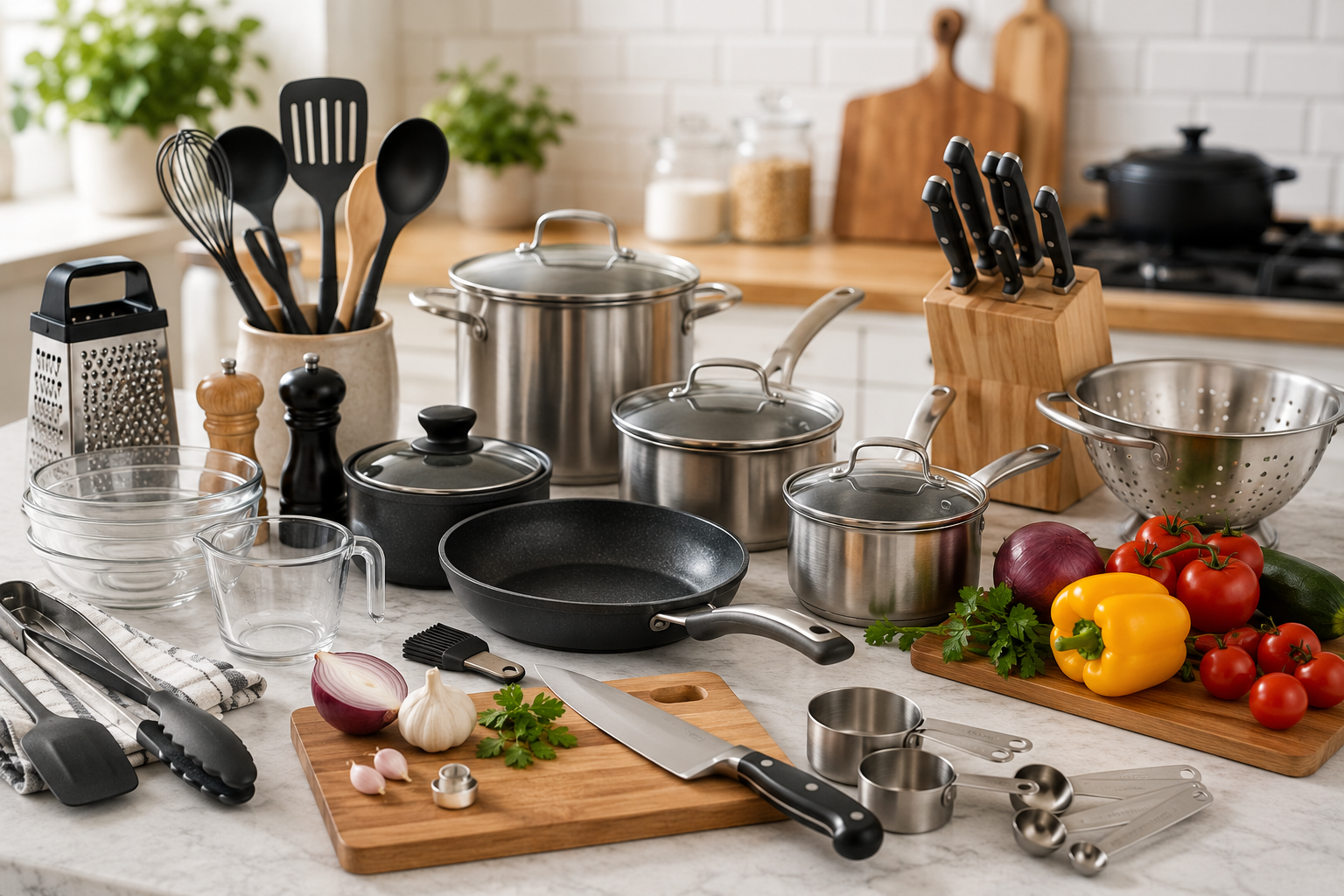
Essential Kitchen Tools for Home Chefs: The Ultimate Guide to Must-Have Cookware and Utensils
Discover the essential kitchen tools that every home chef should have to enhance cooking precision, efficiency, and enjoyment. From chef's knives to modern gadgets, this guide covers the must-have cookware and utensils to elevate your culinary skills.
Estimated reading time: 12 minutes
Key Takeaways
- A sharp chef’s knife is the most important kitchen tool for safety and precision.
- Silicone utensils protect cookware and withstand high heat.
- Durable cookware such as cast iron and stainless steel pans are kitchen staples.
- Kitchen scales provide precision that surpasses measuring cups, especially for baking.
- Specialty tools and modern gadgets add efficiency and professional flair.
- Proper maintenance and organized storage maximize the lifespan of all tools.
Table of Contents
- 1. Why a Chef’s Knife is the Most Important Kitchen Tool
- 2. Essential Kitchen Utensils for Everyday Cooking
- 3. Cookware Staples: Quality Materials You Can Rely On
- 4. Advanced Bakeware and Baking Essentials
- 5. Kitchen Scales: Precision Over Measuring Cups
- 6. Modern Gadgets: Convenience Meets Tradition
- 7. Specialized Kitchen Utensils That Elevate Your Cooking
- 8. Smart Kitchen Storage and Organization Tips
- 9. Insights from the Cooking Community: Practical Tips from Reddit
- 10. Professional Japanese Chef Knives: Craftsmanship and Precision
- 11. How to Prioritize Kitchen Tools Based on Your Cooking Style and Budget
- Conclusion: Build Your Ideal Kitchen with Essential Tools
1. Why a Chef’s Knife is the Most Important Kitchen Tool
A sharp, versatile chef's knife is the heart of any kitchen. It is the most commonly used tool that dramatically improves precision, speed, and safety when preparing food. Choosing the right knife and maintaining it properly will make your cooking not only efficient but also enjoyable.
Knife Types and Materials
Japanese knives such as Gyuto, Santoku, Nakiri, and Yanagiba are renowned for their craftsmanship and sharpness. Popular steels include VG-10 Steel, offering an excellent balance of durability and corrosion resistance, and Blue Steel (Aogami), prized for its edge retention but needing careful care.
Maintenance and Care
- Sharpen regularly with whetstones or quality sharpeners.
- Always hand-wash and dry immediately; avoid dishwashers.
- Store safely in magnetic strips or knife blocks to protect blades.
Investing in a quality chef’s knife and maintaining it well ensures your tool lasts and becomes an extension of your culinary art.
2. Essential Kitchen Utensils for Everyday Cooking
Beyond knives, certain utensils are indispensable for smooth cooking:
- Silicone Slotted Turner: Heat-resistant and gentle on cookware, ideal for flipping and draining.
- Tongs with Silicone Tips: Safe use with locking mechanisms for storage.
- Measuring Cups and Spoons: Preferably color-coded for quick and accurate measurements.
- Whisks: Balloon and flat versions for eggs, sauces, and batters.
- Peelers: Ergonomic options like Kuhn Rikon make prep effortless.
- Can Openers: Reliable models (e.g., OXO) ensure smooth operation.
Why Choose Silicone Utensils?
Silicone utensils combine heat resistance, non-reactiveness, and gentleness on non-stick surfaces. They're an excellent investment for cooks seeking longevity and versatility.
3. Cookware Staples: Quality Materials You Can Rely On
Durability and versatility are paramount when selecting cookware. Preferred materials include:
- Cast Iron Skillets and Dutch Ovens: Exceptional heat retention and versatile for searing, roasting, and braising.
- Stainless Steel Pans: Durable, non-reactive, dishwasher-safe; perfect for browning and sautéing.
- Non-Stick Frying Pans: Ideal for delicate foods like eggs; space-saving folding handles add convenience.
Care Tips for Cast Iron
- Regular seasoning builds a natural non-stick surface.
- Avoid sudden temperature changes to prevent cracking.
- Clean with warm water and brush; avoid harsh detergents.
Proper upkeep can make cast iron cookware a lifelong kitchen companion.
4. Advanced Bakeware and Baking Essentials
Baking demands tools designed for accuracy and ease:
- Non-stick, nestable muffin tins and sheet pans that optimize space and heat flow.
- Cooling racks for perfect crisping and cooling.
- Stackable stainless steel mixing bowls with silicone bottoms to prevent slipping.
- Fine mesh strainers for sifting flour or draining sauces.
- Durable silicone baking mats and utensils to simplify cleanup.
5. Kitchen Scales: Precision Over Measuring Cups
Digital kitchen scales deliver exact measurements, making them superior to traditional measuring cups, especially in baking where precision is key.
- Provides exact weight for ingredients.
- Tare function lets you reset the scale between additions.
- Easy-to-read digital displays reduce errors.
Reliable brands like Escali kitchen scales are user-friendly choices for home chefs seeking consistency.
6. Modern Gadgets: Convenience Meets Tradition
While not strictly essential, modern appliances can make cooking faster and more enjoyable:
- Instant Pots combine pressure cooking, slow cooking, and rice cooking all in one.
- Air Fryers offer crispy results using less oil, ideal for snacks and quick meals.
- Food Processors and Immersion Blenders speed prep work for chopping, pureeing, and sauce making.
Incorporating these gadgets after securing core tools adds versatility without compromising tradition.
7. Specialized Kitchen Utensils That Elevate Your Cooking
As your cooking skills advance, specialty utensils add professionalism and ease:
- Fish Spatulas: Thin and flexible for delicate fillets.
- Mandoline Slicers: Adjustable blades for uniform vegetable slices.
- Plating Tweezers: Metal tweezers for precise plating and bone removal.
- Burger Smashers: Ensure even cooking and patty shape.
- Pastry Cutters and Piping Bags: Perfect for neat, professional baking finishes.
8. Smart Kitchen Storage and Organization Tips
Effective storage extends tool life and streamlines cooking:
- Color-Coded Cutting Boards: Prevent cross-contamination (e.g., red for raw meat, green for vegetables).
- Stackable Colanders with Folding Handles: Save space and handle multiple tasks.
- Magnetic Knife Strips and Drawer Inserts: Keep tools organized and accessible.
- Pegboards for Wall Storage: Convenient for frequently used utensils.
- Anti-Fatigue Mats: Provide comfort during long prep times.
9. Insights from the Cooking Community: Practical Tips from Reddit
User-driven advice from legs like Reddit’s r/Cooking emphasize practical tool use:
- Use plastic squeeze bottles for oils and sauces to reduce spills.
- Opt for commercial-sized mixing bowls and full sheet pans for versatility.
- Choose heavy-gauge stainless steel utensils for durability and dishwasher safety.
- Regular maintenance preserves tool effectiveness.
- Tool pouches and chef kits aid portable, organized storage.
These insights complement professional recommendations and highlight quality investment.
10. Professional Japanese Chef Knives: Craftsmanship and Precision
For the culinary enthusiast seeking authenticity, professional Japanese knives exhibit unparalleled quality and artistry.
Knife Types
- Gyuto: A versatile chef’s knife, slender and sharp.
- Santoku: Ideal for slicing and dicing with a shorter blade.
- Nakiri: Straight edge designed specifically for vegetables.
- Yanagiba: Long, thin knife for sashimi and precision fish slicing.
Steel and Craftsmanship
Crafted with superior steels like Blue Steel, White Steel, and VG-10, these hand-forged knives offer fine edges built to tackle diverse kitchen tasks. Accompany them with specialized tools such as plating tweezers and fish bone pliers to complete your professional culinary set.
Learn more about Japanese knives at Chef's Edge Japanese knife selections.
11. How to Prioritize Kitchen Tools Based on Your Cooking Style and Budget
Not every kitchen needs every tool. Use these guidelines to build a setup tailored to your needs:
Minimalist Home Chef
- Start with an 8-inch chef’s knife and color-coded chopping boards.
- Add a cast iron skillet and a sturdy stainless steel pan.
- Complement with basic measuring cups and silicone utensils.
Enthusiastic Home Cook
- Expand with a Dutch oven and kitchen scale.
- Add specialty items like fish spatulas, mandolines, and whisk sets.
- Invest in quality bakeware sets for improved baking.
Precision and Specialty Enthusiast
- Focus on professional Japanese knives, plating tools, and premium bakeware.
- Maintain all tools carefully with efficient storage for longevity.
Conclusion: Build Your Ideal Kitchen with Essential Tools
Selecting the right kitchen tools is fundamental for home chefs eager to enhance their cooking journey. A sharp chef’s knife, durable cookware, versatile utensils, and smart organization form the backbone of a functional kitchen.
Investing in quality items like cast iron pans, precise kitchen scales, and professional-grade knives ensures resilience and improves culinary results. Combining classic essentials with modern gadgets and specialty utensils allows for a personalized kitchen that matches your style and cooking goals.
Drawing on advice from culinary experts and passionate cooking communities, upgrading your kitchen with these essentials transforms everyday cooking into an elevated experience.
FAQ
Q1: Why is a chef’s knife considered the most important kitchen tool?
A chef’s knife is used most frequently in the kitchen and directly impacts precision, efficiency, and safety during food prep. Its versatility allows it to handle slicing, dicing, chopping, and more, making it indispensable.
Q2: Are silicone utensils better than metal or wooden ones?
Silicone utensils are heat resistant, non-reactive, and gentle on non-stick cookware, reducing damage and extending pan life. They offer a good balance of durability and flexibility compared to metal or wooden alternatives.
Q3: How often should I sharpen my kitchen knives?
Sharpening frequency depends on usage but typically every 2-4 weeks for regular home cooks. Using a honing rod between sharpenings maintains edge alignment and prolongs sharpness.
Q4: What cookware materials are best for durability?
Cast iron and stainless steel are top choices for durability and versatility. Cast iron offers excellent heat retention; stainless steel is non-reactive and dishwasher safe. Non-stick pans are great for delicate foods but require gentler care.
Q5: Why should I consider using a kitchen scale?
Kitchen scales provide precise measurement by weight rather than volume, enhancing recipe accuracy and consistency, especially crucial in baking where exact proportions matter.