Cart
0
You've seen them everywhere: four-packs of fabric storage bags, all roughly the same grey-quilted look, all promising to tame your closet. Most of them look identical in the listing photo. Then you buy one, stuff it with sweaters, and discover the zipper fights you every time, the window fogs over, and the whole thing collapses sideways like a deflated balloon.
The good news is that the features that separate a genuinely useful set from a frustrating one are easy to spot — if you know what to look for before you add to cart. This guide walks through the four things that actually matter in practice.
1. The Window: Can You Actually See What's Inside?
The whole point of a clear window is to skip the guessing game. But not all windows are equal. A small porthole on one side tells you almost nothing when you have six bags stacked in a closet. A wide, floor-to-ceiling panel on the front face is a different story — you can identify the contents without pulling anything down.
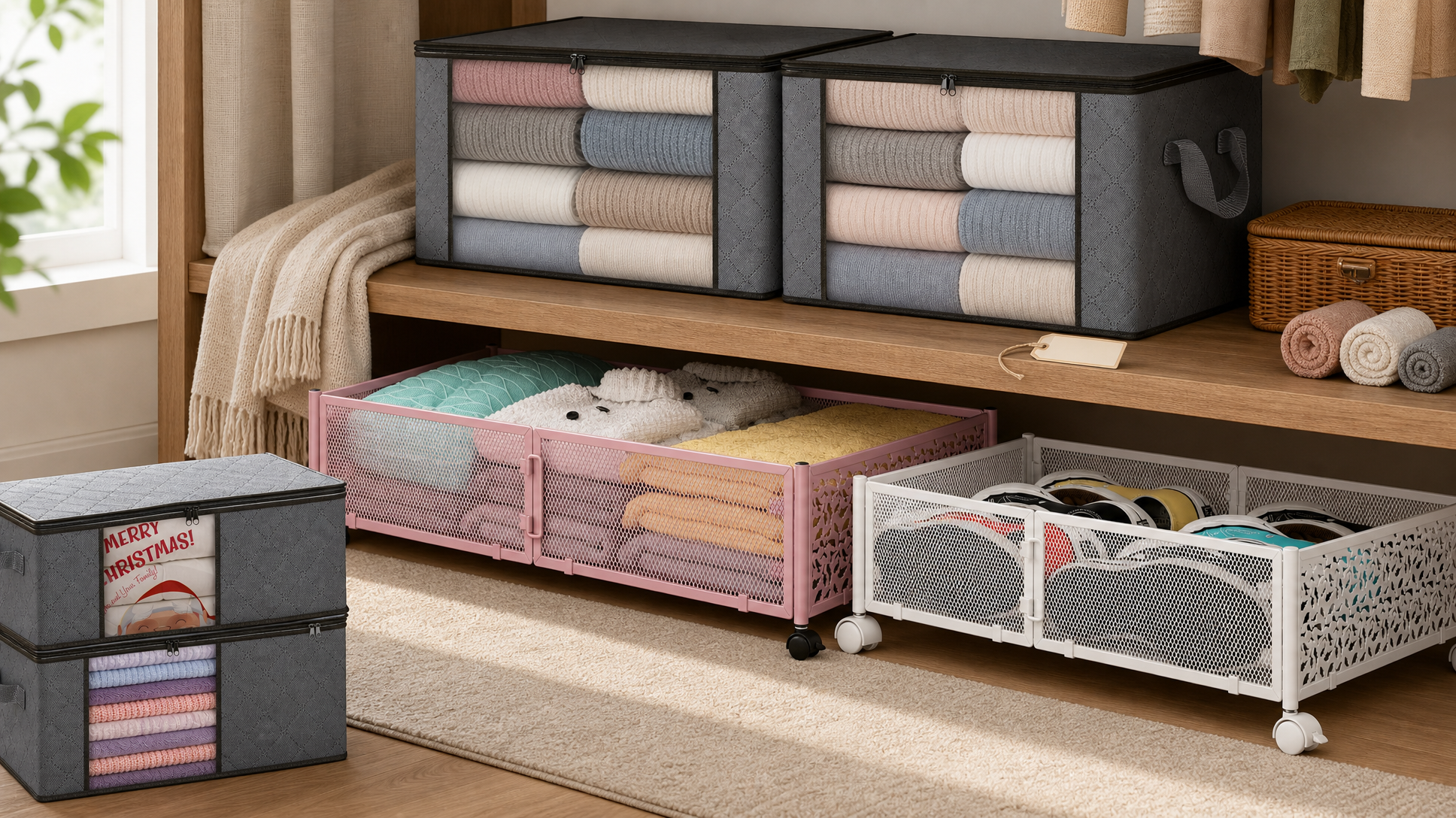
The HomeHacks Storage 4-Pack Clothes Organizer Storage Bags features a large clear window that runs across most of the front face, which means you can see at a glance whether that bag holds your flannel sheets or your summer linens. The Clothes Storage Bags Foldable Blanket Storage Bins takes a similar approach. Both show the contents clearly rather than offering a token peek.
When you're evaluating any bag, ask yourself: if this were stacked on a shelf at eye level, would I be able to read what's inside without unzipping it? If the answer is no, the window isn't doing its job.
2. Handle Construction: How Are You Actually Going to Move This Thing?
A bag stuffed with a king-size comforter is heavy. Thin, stitched-on ribbon handles will cut into your hands or pull away from the fabric after a few uses. What you want are reinforced handles — wide, sturdy webbing that's sewn through the body of the bag, not just attached to the surface.
The Clothes Storage Bags Foldable Blanket Storage Bins comes with durable handles built to manage the weight of bulkier items like blankets and thick sweaters. The HomeHacks Storage 4-Pack similarly features sturdy handles designed for real use. In both cases, the handles are wide enough to grip comfortably even when the bag is at capacity.
One practical test: once the bag is full, lift it by the handles from the side. If they flex dramatically or the attachment point strains, that's a sign they won't hold up long-term.
3. Zipper Quality: The Detail Nobody Talks About Until It Breaks
A zipper that snags on the fabric every time you open the bag stops being a minor annoyance very quickly. The zipper also needs to close fully — all the way to the corner — or dust and moisture find their way in, which defeats the purpose of storing off-season items.
Look for a smooth-running zipper with a pull tab large enough to grip easily. Both the HomeHacks Storage 4-Pack and the Clothes Storage Bags Foldable Blanket Storage Bins use zippered closures designed to seal cleanly. When you're shopping, run the zipper back and forth in the listing video if one is available, or read reviews specifically mentioning zipper performance — it's one of the most common failure points and one of the most telling.
4. Structure: Does It Hold Its Shape When Full?
A floppy bag that collapses once you stuff it is harder to stack, harder to slide onto a shelf, and harder to retrieve items from without the whole pile shifting. Thick, semi-rigid fabric and reinforced panels make a real difference here.
The Clothes Storage Bags Foldable Blanket Storage Bins uses thick fabric construction that helps the bag maintain its shape under load — useful when you're stacking multiple bags in a closet or on a shelf. The HomeHacks Storage 4-Pack is designed with a structured body as well, which means the bags sit squarely rather than sagging into each other.
This matters especially if you're using them for bulky items like comforters or multiple sweaters. A bag that holds its shape is also easier to fold flat and store when it's empty — a small thing that makes seasonal rotation much less of a chore.
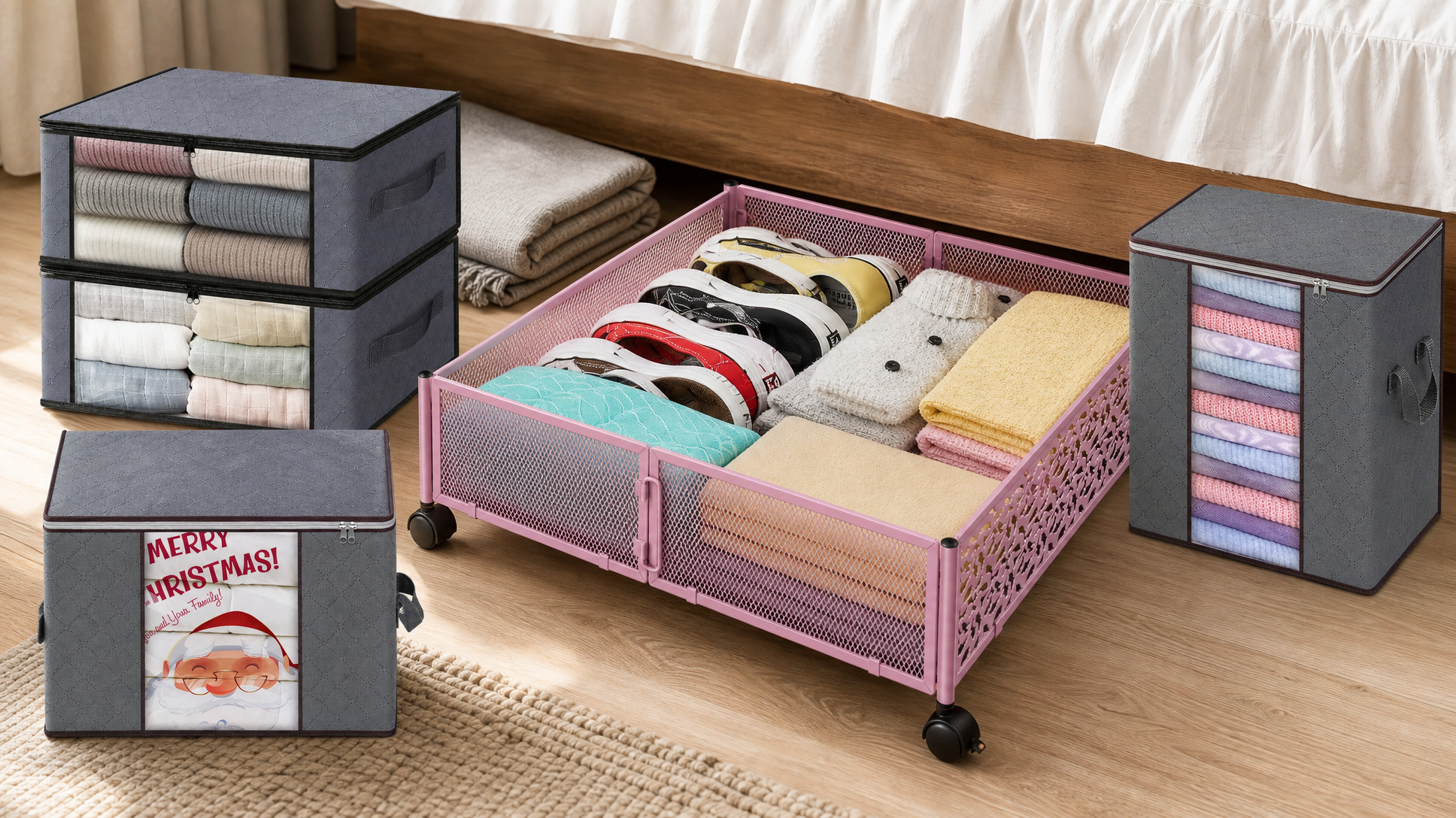
Under-Bed Storage: A Different Tool for a Different Job
Fabric bags are excellent for closet shelves, under-stair storage, and stacking in a wardrobe. But if you're storing items under the bed — shoes, seasonal clothes, extra bedding — a rigid under-bed organizer with wheels is often the better choice. Fabric bags under the bed tend to flatten, slide around, and collect dust in ways that a structured container doesn't.
The Under Bed Storage and PHINOX Under Bed Storage containers are built specifically for this. Both feature open-top metal mesh frames on rolling casters, so you can slide them in and out without getting on your hands and knees. The mesh sides mean airflow reaches your stored items, and the wheeled base means the whole thing glides out smoothly even when full of shoes or folded clothes. They come in pink and white variants, so they can blend into a bedroom rather than looking like utility storage.
Think of it this way: fabric bags for the closet, wheeled containers for under the bed. They solve different problems, and using each where it's strongest makes the whole system work better. If you're setting up a bedroom from scratch, our guide on what to buy when you move in covers how storage fits into the bigger picture of outfitting a new space.
The Quick Checklist Before You Buy
- Window size: Large enough to identify contents without unzipping?
- Handle width and attachment: Reinforced and sewn through the body, not just the surface?
- Zipper: Smooth-running, full-length closure with a grippable pull tab?
- Fabric thickness: Does the bag hold its shape when loaded, or does it slump?
- Foldability: Can it collapse flat when empty for easy off-season storage?
Run any set you're considering through those five points and you'll cut through the noise quickly. Most four-packs that fail do so on zipper quality or structure — those are the two worth scrutinizing most closely.
Browse the Clothes Storage Bags Foldable Blanket Storage Bins and the HomeHacks Storage 4-Pack Clothes Organizer Storage Bags — along with the under-bed rolling containers — in the Homenkitchenshop storage collection. Both fabric bag options and both under-bed organizers are available now.
Frequently Asked Questions
Can fabric storage bags protect clothes from dust and moisture?
A well-zipped fabric storage bag does provide a reasonable barrier against dust, which makes it a solid choice for off-season clothes and bedding stored on shelves or in closets. For moisture protection, make sure the zipper closes completely and the bag is stored in a dry area — fabric bags are not airtight and are not a substitute for vacuum-seal bags in damp environments.
Are these fabric storage bags good for storing comforters and bulky blankets?
Yes — large fabric storage bags with thick construction are one of the most practical ways to store comforters and blankets when they're not in use. The key is choosing a bag with a wide opening so you can get the bulky item in and out without a struggle, and sturdy handles so you can lift it from a high shelf safely.
What's the difference between using fabric storage bags versus under-bed rolling containers?
Fabric bags work best on closet shelves, in wardrobes, or stacked in any upright storage space — they're stackable, foldable when empty, and easy to label or see through. Under-bed rolling containers are better suited for the floor space under a bed frame because they're rigid, low-profile, and roll out smoothly on casters. Fabric bags placed under a bed tend to flatten and are harder to retrieve without pulling the whole thing out.
How do I keep fabric storage bags from getting musty over a long storage season?
Make sure everything going into the bag is clean and completely dry before you seal it — even slightly damp fabric can develop a musty smell over months. Storing the bags in a well-ventilated area (rather than a basement prone to humidity) also helps. Some people add a small cedar block or a sachet of baking soda inside the bag as an extra precaution, though this is a general home storage tip rather than specific to any product.