Cart
0
The headlines are scarier than the reality
You bought an air fryer — or you're thinking about it — and then you fell down a search rabbit hole that ended with words like "acrylamide" and "cancer risk." Now you're not sure whether to use it or return it.
Here's the honest answer: air fryers are not inherently bad for you. But like any cooking method, how you use one matters. The fear circulating online is based on a real phenomenon, just wildly overstated for clicks. Let's sort out what's actually true.
How an air fryer actually works
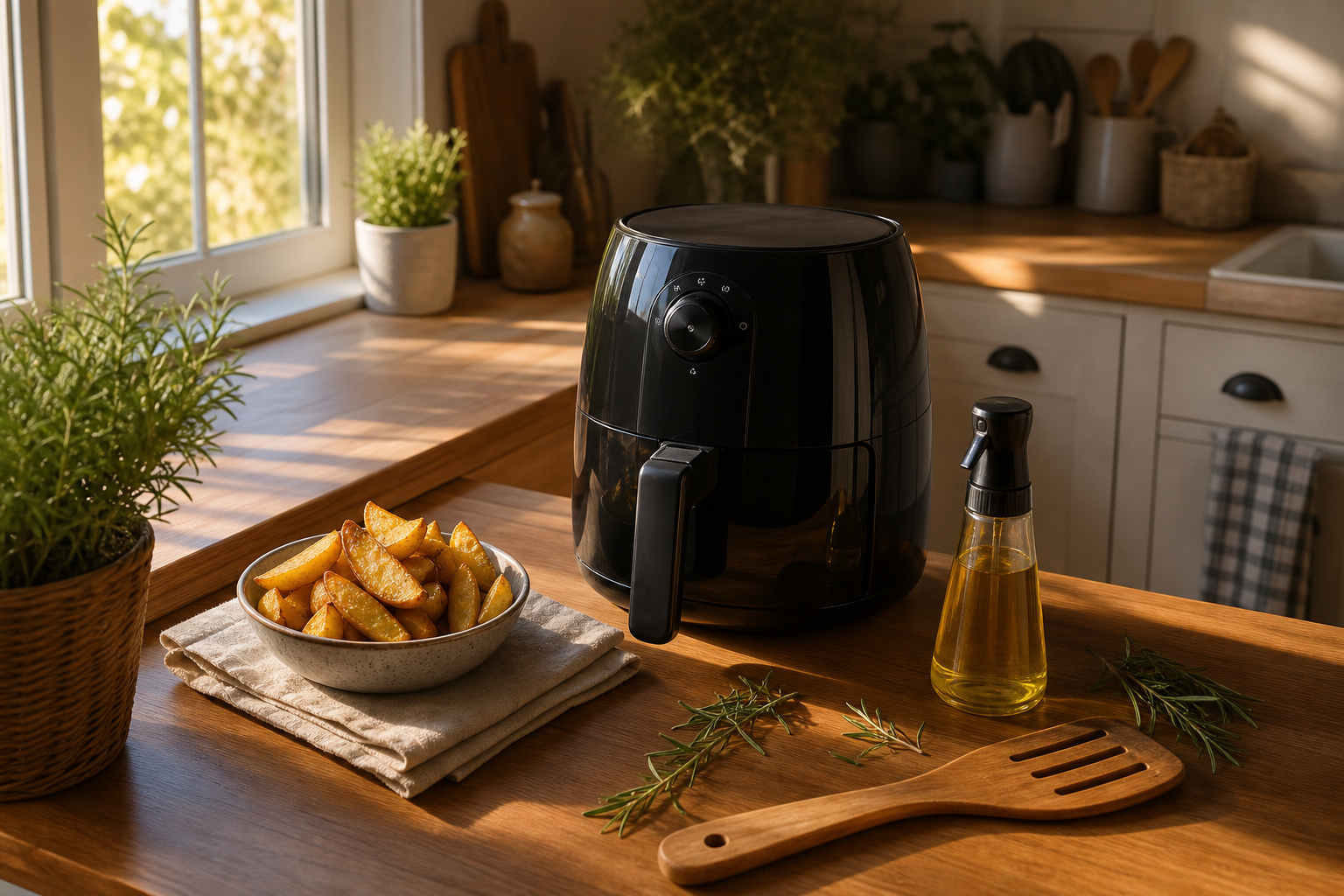
An air fryer is essentially a compact convection oven. A heating element and a powerful fan circulate very hot air around the food at high speed, cooking it quickly and creating a crispy exterior without submerging anything in oil. You typically use a tablespoon of oil or less — sometimes none at all.
That's the core reason air fryers got popular: they produce a fried-food texture with a fraction of the added fat compared to deep frying. Less oil means fewer calories from fat and less exposure to whatever happens to oil when it's heated to high temperatures. That part is genuinely true.
So where does the cancer concern come from?
The concern centers on acrylamide, a chemical compound that forms naturally in starchy foods — potatoes, bread, cereals — when they're cooked at high temperatures through a process called the Maillard reaction. This isn't unique to air fryers. It happens when you bake, roast, toast, or deep fry those same foods.
Acrylamide has been shown to cause cancer in animals at very high doses in laboratory studies. The National Cancer Institute notes that whether the levels found in cooked food meaningfully raise cancer risk in humans is still an open scientific question — the evidence in human studies has not been conclusive. Regulatory bodies including the FDA continue to study dietary acrylamide and recommend that people reduce exposure where practical, but they have not issued warnings against specific appliances.
Air fryers can produce acrylamide — but so can your oven, your toaster, and a deep fryer. The appliance isn't the problem; cooking starchy foods at very high heat for too long is where the exposure comes from.
What actually affects your risk in the kitchen
If you want to cook more consciously, here's where your attention is better spent:
- Don't overcook or char starchy foods. Acrylamide levels rise significantly when food is cooked past golden-brown into dark brown or black. Aim for a light golden color on fries, chips, and toast.
- Soak potatoes before cooking. Soaking cut potatoes in water for a period before cooking can help reduce acrylamide formation — this applies whether you're air frying, roasting, or deep frying.
- Ventilate your kitchen. Any high-heat cooking produces some airborne compounds. A range hood or an open window is a simple habit worth keeping regardless of your appliance.
- Vary your cooking methods. Steaming, poaching, and boiling don't produce acrylamide at all. A kitchen that uses multiple methods — not just high-heat cooking every night — gives you natural variety.
None of these are air-fryer-specific rules. They're just good general cooking habits.
What air fryers are genuinely good at
Cutting through the fear is one thing, but it's worth being clear about where air fryers actually earn their place on the counter.
They're fast. Weeknight dinners that would take 40 minutes in a full oven can often be done in half the time. They preheat in minutes rather than the 15-20 minutes a conventional oven can need. For small households or anyone cooking for one or two people, that speed and energy efficiency is real.
They reheat brilliantly. Leftover pizza, roasted vegetables, fried chicken — things that go soggy in a microwave come back crispy in an air fryer. That alone is a reason many people keep one around.
And for people managing fat intake for health reasons, replacing a deep fryer with an air fryer does meaningfully reduce the amount of oil in the finished dish. That's a legitimate benefit, not marketing spin.
Who an air fryer might not be right for
Air fryers aren't magic, and they're not for every kitchen. If you're cooking for a large family, most consumer-sized air fryers will have you cooking in multiple batches — a full-size oven is more practical. They're also not great for wet batters (think beer-battered fish), soups, or anything that needs to be fully submerged in liquid.
If your primary concern is healthy eating, an air fryer is a tool — not a solution. Cooking ultra-processed foods in an air fryer doesn't make them a health food. The cooking method matters less than what you're starting with.
The bottom line
Air fryers are not bad for you. The acrylamide concern is real but applies to high-heat cooking broadly — not to any one appliance. Used sensibly, with attention to cook time and color, an air fryer is a practical, fast, lower-fat alternative to deep frying that earns its counter space in most kitchens.
If you're in the market for one, browse the selection of small kitchen appliances at Homenkitchenshop to find a size and style that fits how you actually cook. And if you're stocking a kitchen from scratch, our guide on what to buy when you move in covers the essentials worth prioritizing first.
Frequently Asked Questions
Do air fryers produce more acrylamide than a regular oven?
Not necessarily. Acrylamide forms in starchy foods cooked at high heat regardless of the appliance. Studies comparing air fryers and conventional ovens have not established that air fryers consistently produce higher levels. Cooking time and temperature — and how dark you let the food get — matter far more than which appliance you use.
Is it safe to use an air fryer every day?
Yes, for most people daily air fryer use is fine. The key is the same as with any cooking method: vary what you cook, don't consistently overcook or char food, and make sure your kitchen is reasonably ventilated. Using it every day for a range of foods — vegetables, proteins, reheated leftovers — is no different from using an oven daily.
Are non-stick air fryer baskets safe?
Most modern non-stick coatings are considered safe for normal cooking use. The main precaution with any non-stick surface is avoiding very high heat with an empty basket and not using metal utensils that scratch the coating. If the coating is visibly chipped or flaking, it's worth replacing the basket or the unit. Check the manufacturer's guidelines for the specific model you own.
Can air fryers replace a conventional oven?
For small households and everyday meals, an air fryer handles a surprising amount of what an oven does — often faster and more efficiently. But for large roasts, full sheet-pan dinners, baking full-sized cakes, or anything that needs consistent low-and-slow heat across a large surface, a conventional oven is still more practical. Most people find the two work well together rather than one replacing the other.