Cart
0
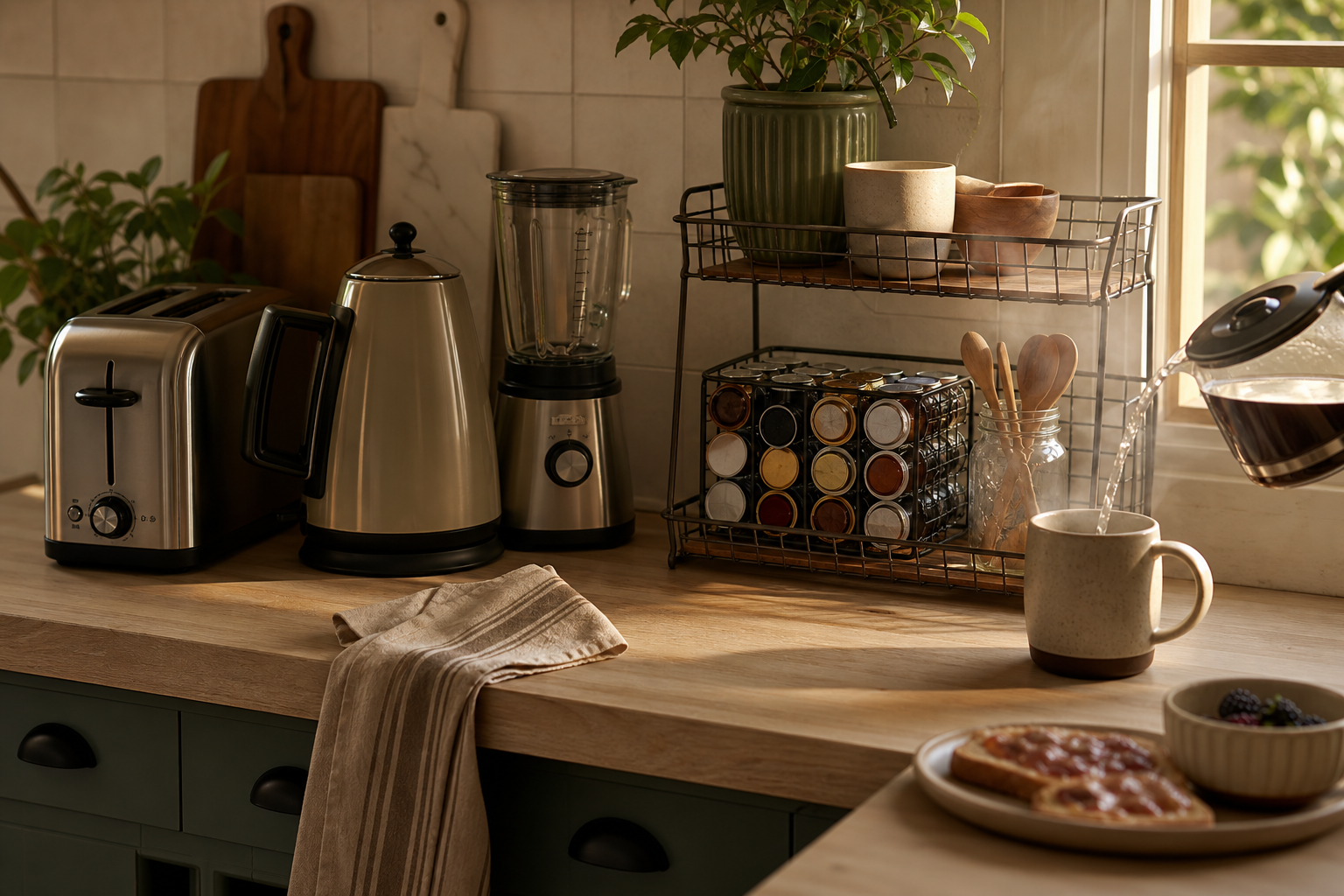
The counter-space problem nobody warns you about
You buy a kettle. Then a toaster. Then an air fryer because everyone said it would change your life. Suddenly half your counter is a small-appliance parking lot, and you're chopping vegetables in a six-inch strip of clear space next to the sink. Sound familiar?
The frustrating part isn't owning those appliances — it's that most storage advice falls into two useless camps: "just put it in a cabinet" (great, now you'll never use it) or "display everything beautifully" (fine if you have a magazine kitchen, less fine if you have a real one). What most people actually need is something in between: appliances that are genuinely easy to reach but not permanently squatting on your prep surface.
Here are three storage approaches that work in real kitchens, with honest trade-offs for each.
Approach 1: The dedicated appliance cabinet
This is the most organized-looking solution, and it works well — if you set it up right. The idea is simple: designate one cabinet (ideally with a lower shelf or pull-out drawer) specifically for small appliances, so they have a home that isn't the counter.
The trade-off is friction. If your blender lives in a deep cabinet behind a stack of pots, you'll stop using it within a week. The fix is to treat this cabinet like a staging area, not a storage closet. Keep the door accessible, arrange appliances so the ones you use most are at the front, and resist the urge to stack anything heavy on top of anything else. A simple shelf riser inside the cabinet can effectively double your usable space and keep heavier items — like a stand mixer — at counter height so you're not lifting them out awkwardly.
Best for: kitchens with generous cabinet space and appliances used a few times a week, not daily.
Approach 2: Wire basket or rack stacking
If cabinet space is already maxed out, vertical stacking on the counter itself is a smarter move than it sounds. The goal isn't to pile appliances on top of each other — it's to use the vertical space around them more efficiently.
A sturdy wire or metal basket system lets you store smaller items (hand blender, coffee pod organizer, spare filters) at a second level above the counter surface, freeing up the footprint below for actual prep. Stackable wire shelves can also sit beside or above a toaster, turning dead air space into functional storage without requiring any installation.
This approach works especially well in rental kitchens where you can't add shelving or modify cabinets. It's also the most flexible — you can rearrange as your appliance lineup changes. The honest downside: it can look cluttered if you're not selective about what goes up there. Limit it to items you genuinely reach for daily, and keep everything else out of the wire ecosystem.
Best for: renters, small kitchens, and anyone who uses three or more appliances every single day.

Approach 3: The rolling cart
A kitchen cart on wheels is genuinely underrated for appliance storage, and it solves a problem the other two approaches don't: it moves. That matters more than people expect.
Park the cart against a wall or in a corner when you're not cooking. Roll it next to the counter when you need the air fryer or the pasta maker. When guests come over and you want the kitchen to look tidy, roll it into the pantry or even a nearby closet. The cart becomes a portable appliance station rather than a permanent fixture — and because it has its own surface, it doesn't compete with your counter space at all.
Look for a cart with at least one lower shelf (for heavier items like a slow cooker) and a solid top surface rated for the weight of what you're storing. Locking casters are worth it — nothing is more annoying than a cart that drifts every time you unplug something.
The trade-off here is footprint. A rolling cart needs somewhere to live when it's not in use. If your kitchen flows into a dining area or you have a hallway pantry nearby, this is a non-issue. If your kitchen is genuinely tiny with no overflow space, it can feel like you've just moved the clutter rather than solved it.
Best for: open-plan kitchens, kitchens that connect to a pantry or dining room, and anyone who entertains regularly.
How to decide which one fits your kitchen
Honestly, most people end up using a combination of two of these — a rolling cart or wire basket system for daily-use appliances, and a dedicated cabinet shelf for the ones that come out weekly or seasonally. The mistake is trying to apply one uniform system to every appliance regardless of how often it gets used.
A quick way to audit your current setup: pull everything off your counter and ask, for each appliance, how many times you used it in the last two weeks. Daily users earn counter or cart space. Weekly users belong in an accessible cabinet. Anything you haven't touched in a month probably doesn't need prime real estate in a small kitchen.
If you're also working through a broader home organization overhaul — say, you've just moved in or you're refreshing a whole room — the same thinking applies beyond the kitchen. Our guide on what to buy when you move in covers the practical essentials room by room, which pairs well with getting your kitchen storage sorted first.
One last thing
The goal isn't a perfectly styled counter that photographs well. It's a kitchen where you can actually cook without moving three things out of the way first. Pick the approach that fits how you cook, not how you wish you cooked, and adjust from there.
Browse storage baskets, wire shelves, and organizers at Homenkitchenshop to find the right fit for your countertop setup — whether you're building out a cart system, adding a shelf riser to an existing cabinet, or just looking for something that keeps the daily-use appliances within arm's reach without eating your prep space.
Frequently Asked Questions
How do I store appliances I only use occasionally, like a waffle maker or stand mixer?
Occasional-use appliances are the best candidates for upper cabinets or even a shelf in a nearby closet or pantry. The key is making sure they're still accessible — not buried behind other items — so you'll actually pull them out when you want them. If your stand mixer is heavy, a lower cabinet shelf or a rolling cart with a sturdy surface is safer than an upper cabinet you'd have to lift it down from.
What's the best way to store appliances in a very small kitchen with limited cabinet space?
Vertical space is your best friend in a small kitchen. Wire shelf risers and stackable organizers let you use the air above your counter rather than spreading out across it. A narrow rolling cart parked against a wall can also add meaningful storage without permanently occupying floor space. The other move is to be ruthless about which appliances actually live in the kitchen — anything used less than once a month can probably be stored in a closet elsewhere in your home.
Are rolling kitchen carts sturdy enough to hold heavier appliances like an air fryer?
It depends on the cart. Before you buy, check the weight rating for both the top surface and the lower shelves, since they're often rated differently. For heavier appliances, look for carts with a solid (not slatted) top surface and locking casters so the cart stays put when you're plugging things in and out. A cart that wobbles under load is a safety issue, not just an annoyance.
Should I keep my toaster and kettle on the counter if I use them every day?
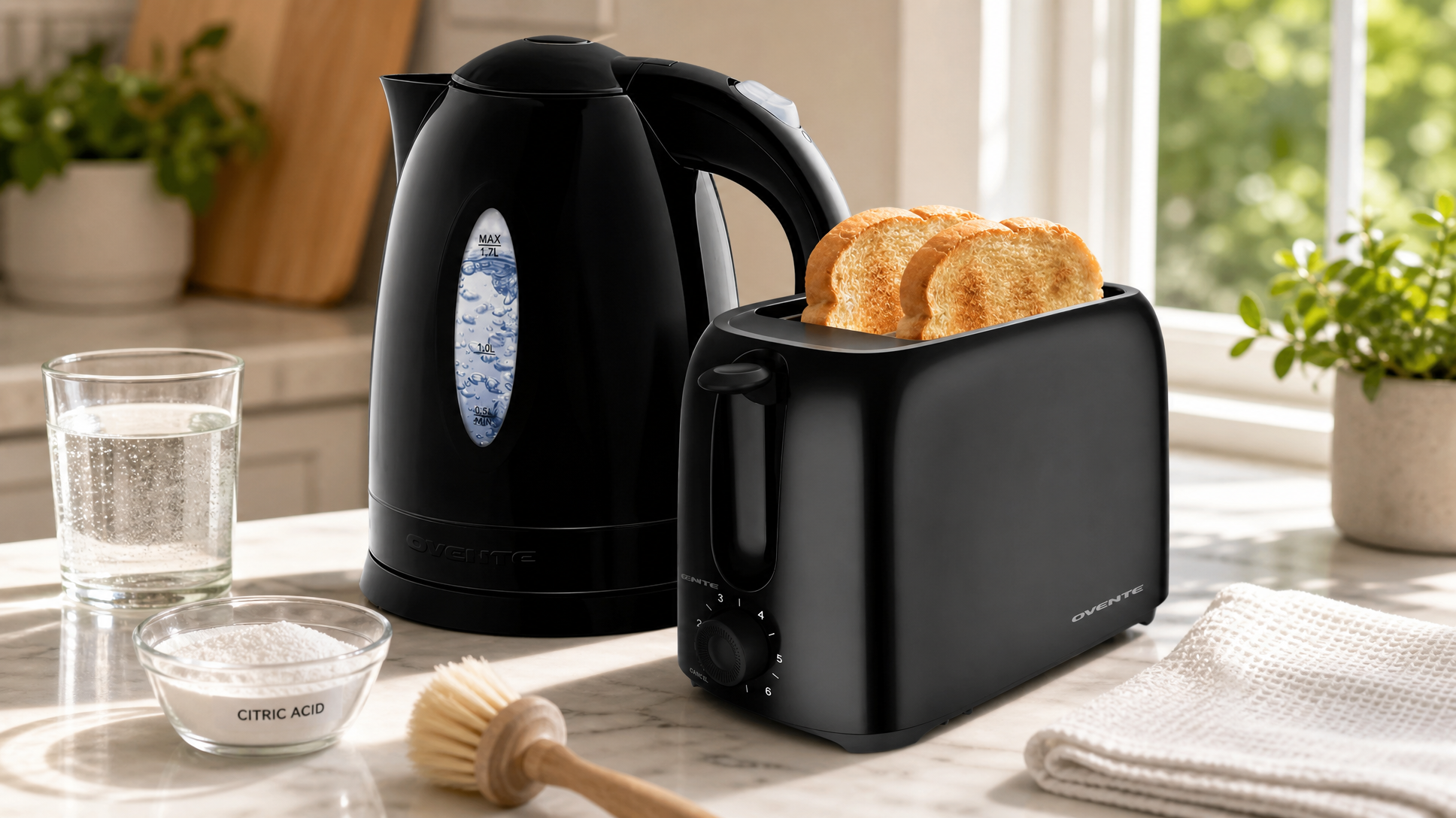
Yes — daily-use appliances generally earn their counter space. The problem isn't keeping them out; it's keeping everything out regardless of how often it gets used. If your toaster and kettle are the only things on the counter, that's a functional setup. If they're sharing space with six other appliances, that's when a wire basket system or rolling cart can help you reclaim the prep surface you actually need.