Cart
0
Most eco-kitchen advice falls into one of two camps: either it's a $4,000 renovation featuring bamboo countertops and a composting drawer, or it's a listicle that makes you feel bad about every piece of plastic you've ever touched. Neither is actually helpful.
The truth is, the biggest wins in a more sustainable kitchen come from small, repeated choices — the things you reach for every single day. Swap those out, and the difference adds up fast. Here are five that are worth making.
1. Ditch the Flimsy Plastic Produce Bags
Those thin, tear-prone bags at the grocery store produce section are one of the easiest things to stop using, and one of the most overlooked. Reusable cotton drawstring bags do the same job — they hold your apples, your green beans, your loose mushrooms — and they wash clean in a regular laundry cycle. Most people who make this swap say they forget they ever used the plastic ones within a week.
The key is keeping them somewhere you'll actually grab them: in your grocery tote, not in a kitchen drawer. Out of sight, out of habit.
2. Replace Paper Towels With Washable Cloths (at Least for Most Jobs)
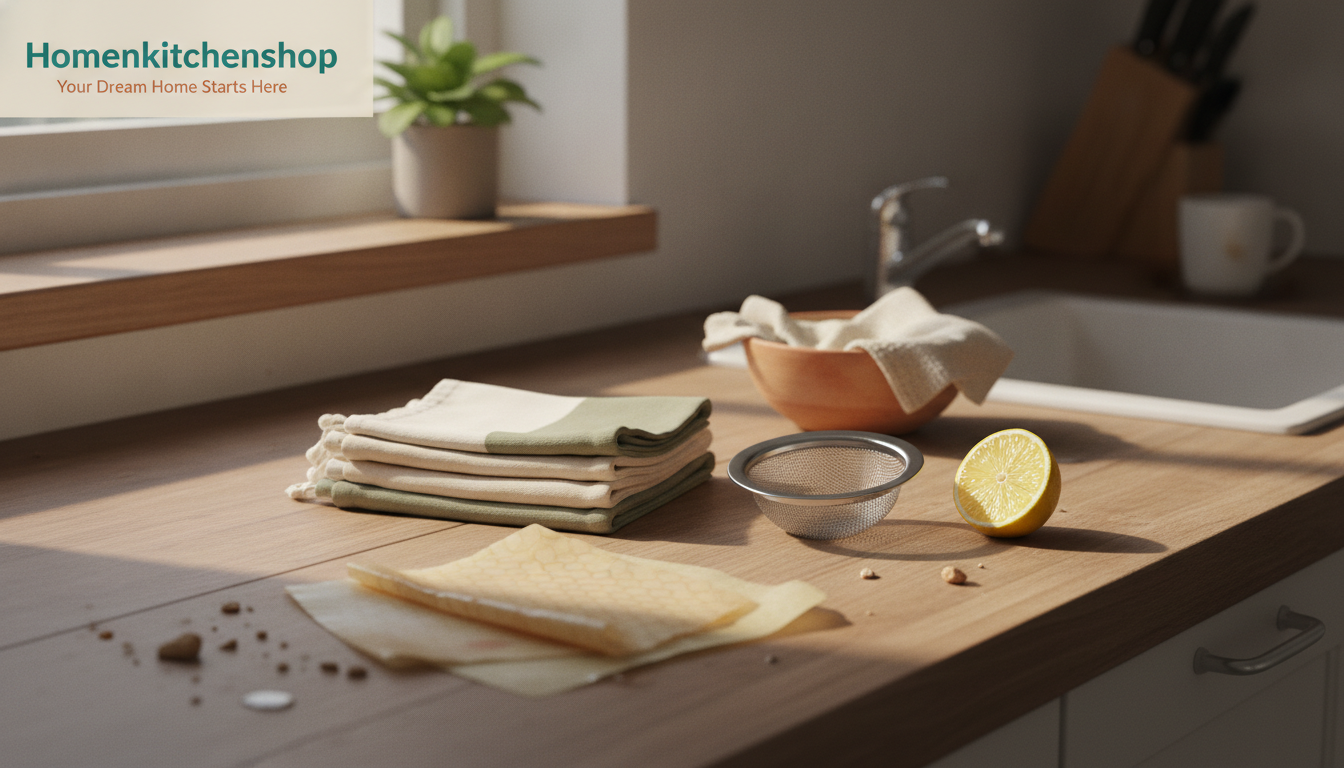
You don't have to go cold turkey on paper towels. But most of what people use them for — wiping a counter, drying hands, blotting a pan — a stack of small cotton cloths handles just as well. Keep a basket of them near the sink and a small bin for used ones nearby. Wash them with your regular laundry.
This is one of those swaps where the math is genuinely satisfying: a good set of cotton cloths lasts years. The paper towel roll you'd have gone through in that time? Gone and forgotten.
3. Switch to a Reusable Sink Strainer You'll Actually Clean
A clogged drain from food scraps is annoying. A cheap plastic strainer that cracks, stains, and ends up in the bin every few months is both annoying and wasteful. A stainless steel strainer — like a proper mesh kitchen sink strainer — doesn't absorb odors, doesn't warp, and doesn't need replacing. It's the kind of thing you buy once and stop thinking about.
It also makes it easier to collect food scraps for composting if that's something you're working toward, since everything collects in one spot rather than going straight down the drain.
4. Use a Proper Beeswax Wrap or Reusable Cover Instead of Cling Film
Plastic cling wrap is genuinely hard to recycle and almost never is. Beeswax wraps and silicone stretch lids cover bowls, wrap half a lemon, and keep leftovers fresh — and they're washable. The texture takes a day to get used to, but most people adjust quickly.
If beeswax doesn't appeal, silicone lids in a few sizes cover the majority of what you'd normally reach for cling film to do. Either way, you're not pulling a new sheet of plastic off a roll every time you put something in the fridge.
5. Swap a Tablecloth or Placemat for a Washable Version
This one's less obvious, but disposable paper placemats and cheaply made tablecloths that pill and fray after a few washes generate more household textile waste than most people realize. A well-made, washable cotton or linen tablecloth gets better with use, not worse. It protects your table, it looks good, and it replaces something you'd otherwise keep buying.
Think of it as the kitchen equivalent of investing in a good pan: the upfront cost is slightly higher, but you stop spending on the throwaway version entirely.
A Note on Doing This Without the Guilt
You don't need to make all five swaps at once. Start with whichever one you'd actually use — the produce bags if you shop fresh produce regularly, the sink strainer if you're already annoyed at replacing plastic ones. The goal isn't a perfect eco-kitchen by next Tuesday. It's building habits that stick because they're genuinely convenient, not because you're white-knuckling your way through inconvenience.
That's what makes these swaps different from the overhaul version: they slot into how you already live, rather than asking you to rebuild your kitchen around them.
If you're also in the middle of setting up a new home and want a broader sense of what's worth buying first, the practical new-home checklist beyond the kitchen is a good place to start — it covers the stuff people forget until they actually need it.
Shop reusable kitchen essentials at Homenkitchenshop — from cotton produce bags to washable tablecloths, it's all in one place.
Frequently Asked Questions
Are reusable produce bags actually hygienic?
Yes, as long as you wash them regularly. Cotton and mesh produce bags can go straight into a regular laundry cycle. The key is treating them like any other kitchen textile — wash them when they're visibly dirty or after carrying something wet or leafy. Most people find a quick machine wash every week or two is plenty.
Do beeswax wraps really keep food as fresh as cling film?
For most uses — covering a bowl, wrapping a cut fruit or vegetable, keeping cheese — beeswax wraps perform comparably to cling film. They're not ideal for raw meat or anything very wet, but for everyday fridge storage they work well. The warmth of your hands molds them to shape, so they seal better than they look like they will at first.
What's the easiest swap to start with if I'm not sure I'll stick with it?
The sink strainer is probably the lowest-friction place to start — it requires zero behavior change on your part. You just swap one item for a more durable version and forget about it. If you want something that makes a more visible daily difference, the cotton cloths in place of paper towels tend to stick quickly once you have them sitting out where you can actually reach them.
Does switching to reusable kitchen items actually save money?
Generally, yes — over time. Most of these swaps involve a slightly higher upfront cost than their single-use equivalents, but because you stop buying replacements, the cost evens out and then tips in your favor. The exact timeline depends on how often you currently buy paper towels, cling film, or replacement plastic strainers, but for most households the savings become noticeable within a few months.