Cart
0
The table always gives it away
You can have great food, good music, and a clean house — but if the table looks like it was thrown together ten minutes before guests arrived, that's the energy the whole party carries. Not because your guests are judging you, but because a thoughtful table genuinely changes how a space feels. It signals: someone cared about this.
The good news is that looking intentional has almost nothing to do with budget and everything to do with layering. Here's how to do it, step by step.
Step 1: Start with a solid base
A bare table is a hard table to style. A fitted tablecloth or a simple solid runner gives you a foundation everything else sits on — and it hides whatever your table actually looks like underneath (scratches, mismatched wood tones, a folding table you dragged out of storage).
For casual birthdays or backyard get-togethers, a single solid-color cloth in white, black, or a muted earth tone does more work than a busy print. It makes every other element on the table pop. If you're going for a themed look — a bachelorette, a baby shower, a holiday dinner — the tablecloth is where you can introduce color, but keep it to one dominant hue and let your accessories do the pattern work.
One practical note: fitted tablecloths that grip the edges of the table are worth it. A cloth that slides every time someone reaches for the chips will quietly drive you crazy all night.
Step 2: Build height variation
Flat tables look flat. The single fastest way to make a party table look styled rather than set is to add levels. You don't need risers or fancy props — a stack of books wrapped in kraft paper, a small cake stand, a wooden cutting board laid flat as a tray, or a lidded storage box flipped upside down under a cloth all create the same effect.
Put your tallest element near the center or back, medium-height pieces in the middle zone, and flat items like plates, napkins, and small dishes at the front. Your eye naturally moves across the table when there's a reason to travel up and down.
Step 3: Group things in odd numbers
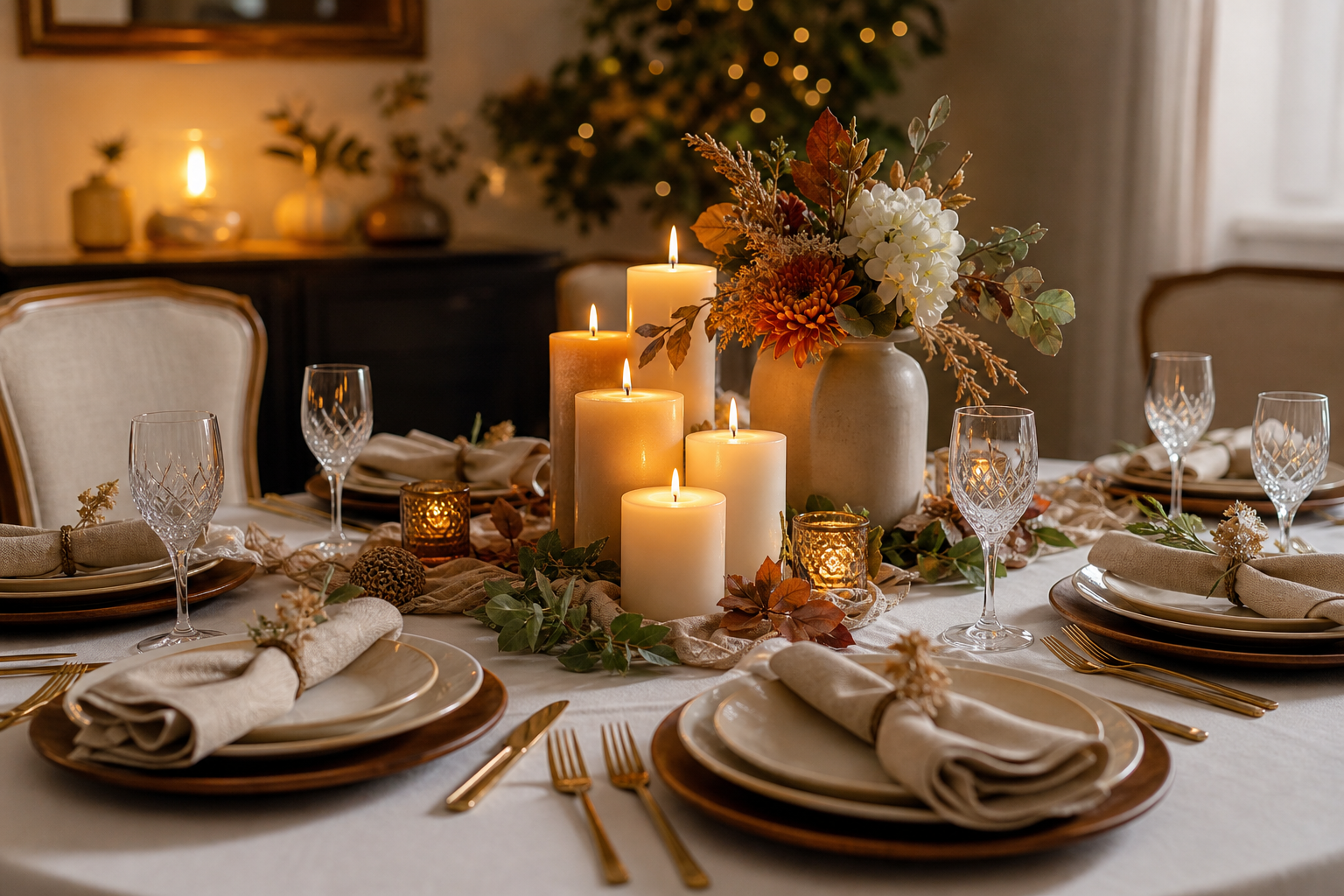
This sounds like a design class rule, but it's one that actually holds up in practice. Three candles look more deliberate than two. Five small dessert cups look more intentional than four. Our brains read even-numbered groupings as "placed" and odd-numbered groupings as "arranged." You don't need to count every item obsessively — just avoid perfectly symmetrical pairs unless you're going for a formal, structured look.
Candles are one of the easiest ways to pull this off. A cluster of three in varying heights, even mismatched ones you already own, instantly reads as styled. If you have a 3-wick candle that throws good scent, it earns double duty: ambiance and fragrance.
Step 4: Add one "hero" moment
Every great party table has one focal point — something the eye lands on first. It could be a floral arrangement (even a $10 bunch from the grocery store in a simple vase), a tiered dessert stand, a large charcuterie board, or a balloon cluster anchored to the table's edge. The hero doesn't need to be expensive. It just needs to be bigger, taller, or more visually interesting than everything around it.
Once you've placed your hero, arrange everything else in relation to it. Things that support the hero go nearby. Things that are purely functional (extra napkins, the cutlery caddy, the condiments) go toward the ends or edges where they're accessible but not competing.
Step 5: Handle the practical stuff without killing the look
Here's where a lot of party tables fall apart: the practical items — the trash bag, the extra rolls of paper towels, the stack of solo cups — end up on the table because there's nowhere else to put them, and suddenly your styled setup looks like a convenience store shelf.
Set up a small side station nearby (a kitchen cart, a small side table, or even a storage bin with a cloth over it) for refills, trash, and extras. Keep only what's actively in use on the main table. A small sink strainer or a bowl near the drink station catches lemon slices, ice, and debris and keeps the wet mess contained without looking like a utility sink.
For cleanup, having a plan before the party starts saves you the post-party scramble. A lidded bin tucked nearby, a designated spot for used plates, and compostable or easy-rinse serveware all make the end of the night feel manageable rather than chaotic.
Step 6: Light it correctly
Overhead lighting is the enemy of a good party atmosphere. If your dining area has a single overhead fixture, supplement it. Candles on the table, a string of warm lights draped nearby, or even a small lamp on the side station all soften the room and make everything — the table, the food, the people — look better.
Warm light (the amber-toned kind) is almost always the right call for a party. Cool white light makes food look less appetizing and spaces feel more clinical. If you're stuck with overhead lighting, dimming it even slightly changes the whole mood.
The checklist version, for the day-of rush
- Tablecloth or runner — fitted if possible
- Height variation — at least one raised element
- One hero focal point (florals, tiered stand, large board)
- Candles or warm light source
- Odd-number groupings for decorative items
- Side station for refills and trash
- Cleanup plan before guests arrive
None of this requires a trip to a party supply store the morning of. Most of it uses what you already have at home, just arranged with a little more intention.
If you're starting from scratch or want to fill in the gaps — a better tablecloth, a reliable candle, smarter storage for your party supplies between uses — browse party table essentials at Homenkitchenshop and find what you're missing without overcomplicating it.
And if you're setting up a new space from the ground up, the practical new-home checklist covers what to prioritize when you're outfitting a home for the first time — including the entertaining basics most people forget until they actually need them.
Frequently Asked Questions
How do I make a party table look good on a tight budget?
Focus on the elements that do the most visual work: a clean tablecloth, one strong focal point (even grocery store flowers in a simple vase), and candles. These three things alone will make a table look pulled-together. You don't need matching serveware or themed accessories — consistency of color does more than matching sets.
What's the easiest centerpiece for a casual birthday party?
A cluster of candles in varying heights is the lowest-effort, highest-impact option. If you want something more festive, a small balloon arrangement anchored with a weight, or a simple bunch of flowers in a pitcher or mason jar, works well without requiring any floral arranging skills.
How far in advance can I set up a party table?
You can set the base layer — tablecloth, height elements, decorative items, and candles — the night before or the morning of the party. Add food, drinks, and perishable items like fresh flowers close to guest arrival. Having the non-food setup done early means you're not scrambling in the last hour.
How do I keep the table looking tidy during the party?
Set up a side station nearby for trash, used plates, and refills so guests aren't piling things back on the main table. A small tray or bowl near the drink area catches mess before it spreads. Doing a quick reset halfway through the party — clearing empty plates, straightening the centerpiece — takes two minutes and keeps the table looking intentional all night.