Cart
0
You've been here before: you buy a set of organizers, spend a Saturday sorting everything, and two weeks later the drawer looks worse than when you started. The bins are full of random stuff, the dividers have shifted, and you're back to digging through a pile. The issue usually isn't a lack of effort — it's that wire baskets and drawer dividers solve different problems, and most people use whichever one they bought without thinking about which one actually fits the space.
This isn't a ranking of which is better. It's a room-by-room breakdown of which format does the job — and where using both together is the real answer.
The Core Difference (And Why It Matters)
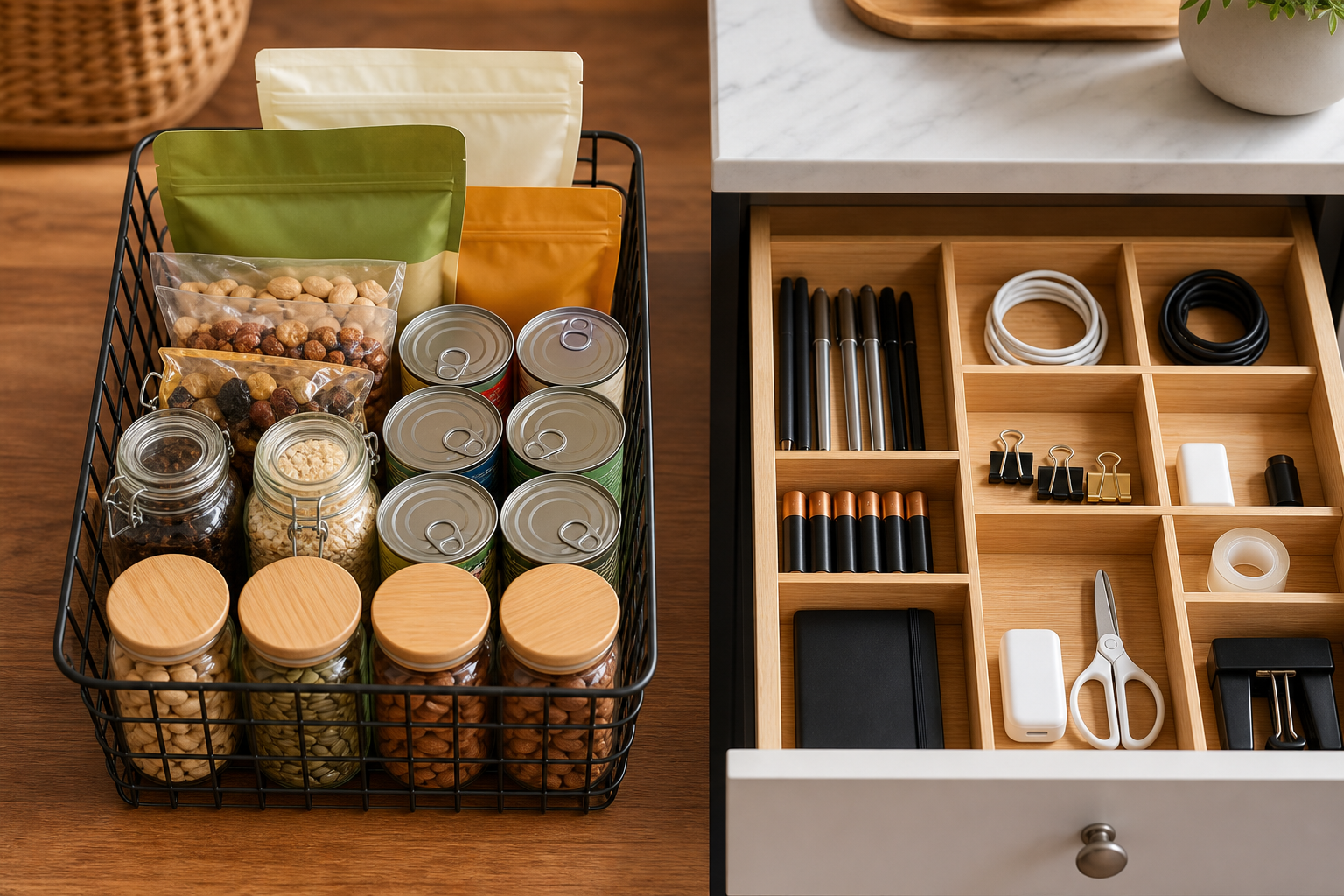
Wire baskets are open, visible, and easy to grab from. You can see everything at a glance, reach in without opening anything, and toss items back quickly. That visibility is a feature, not a flaw — but only when the contents are things you're okay seeing.
Drawer dividers, on the other hand, create fixed or adjustable lanes inside an enclosed space. They work on the assumption that you want items separated, not just contained. The best ones are adjustable, so they can flex as your needs change — which matters more than most people realize when they're buying their first set.
The wrong choice in the wrong room doesn't just look bad. It actively makes things harder to find.
The Pantry: Wire Baskets Win Here
Pantry shelves are wide, deep, and brutal for small items that get pushed to the back and forgotten. A can of chickpeas disappears behind a bag of rice. Snack pouches pile up into an avalanche. Wire baskets fix this by grouping categories — one for canned goods, one for snacks, one for baking supplies — so you pull the whole basket forward instead of excavating the shelf.
The open sides also mean you can see what's running low without pulling everything out. That alone saves a surprising number of duplicate grocery purchases.
Drawer dividers don't belong in a pantry unless you have a dedicated spice drawer. Even then, a shallow drawer with adjustable dividers works well for spice packets and seasoning pouches — it's one of the few pantry spots where lanes actually help.
The Bathroom: Depends on What You're Storing
Under the sink is wire basket territory. The space is awkward, the plumbing gets in the way, and you need to access things like spare toilet paper, cleaning supplies, and backup products without a lot of fuss. A couple of wire baskets — one for cleaning products, one for extras — keeps that chaos contained without requiring you to reorganize every time you reach for something.
The bathroom drawer, though, is a different story. Makeup, skincare, and grooming tools are small, numerous, and easy to lose in a jumble. This is exactly where drawer dividers earn their place. Adjustable ones let you size the lanes to your actual products rather than forcing a tube of concealer into a slot meant for a mascara wand.
If your bathroom counter is a mess of skincare bottles, a small wire basket on the counter actually works better than a tray — it has sides that keep things from rolling off and still looks intentional.
The Home Office Desk: Drawer Dividers, Mostly
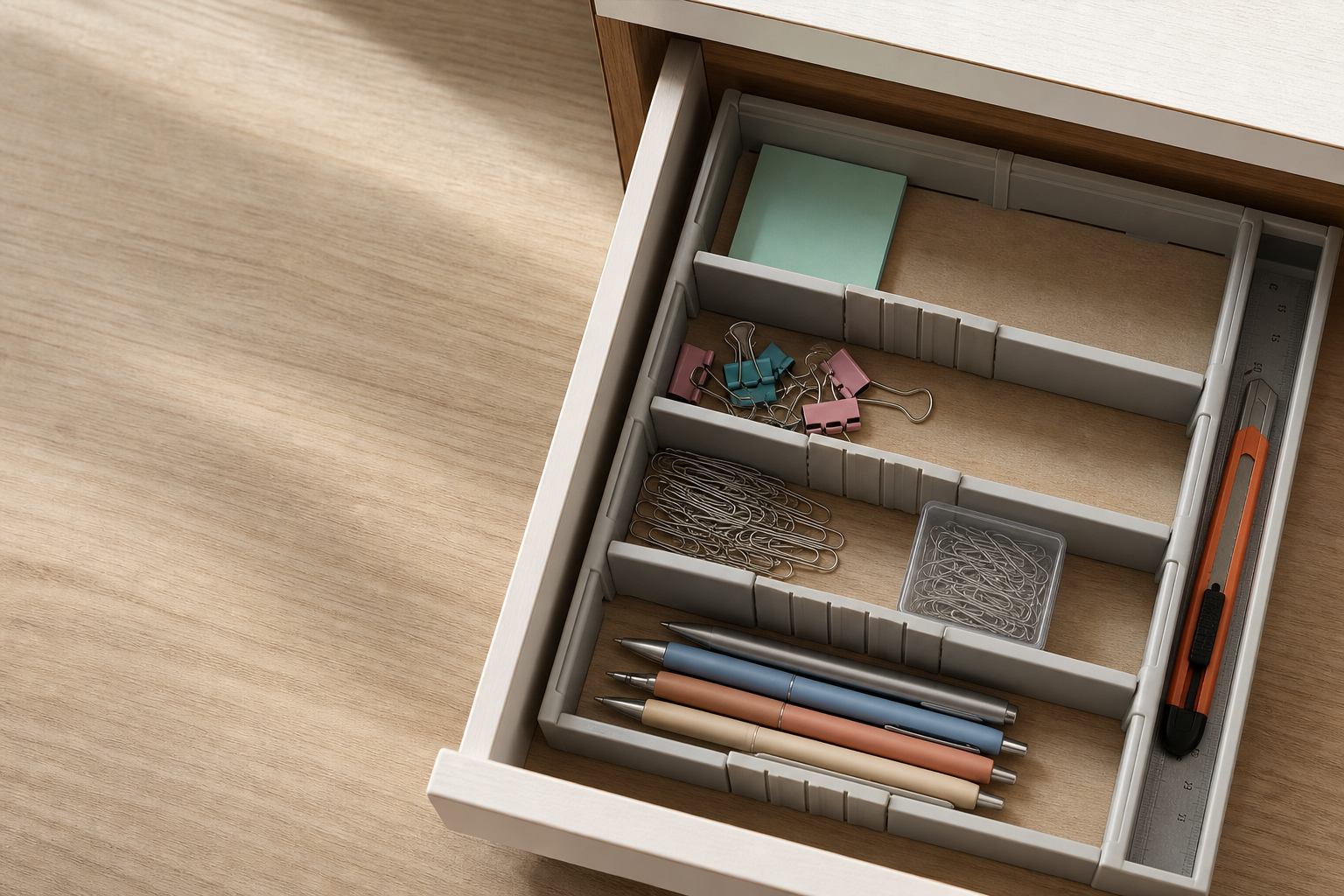
Desk drawers are where pens go to die. Sticky notes, charging cables, paper clips, business cards — without dividers, it all becomes one undifferentiated layer of stuff. Drawer dividers create dedicated spots so things actually go back where they belong, which is the only way a desk stays organized longer than a week.
Wire baskets on or near a desk can work for things like mail sorting, notebooks, or reference files you reach for daily. But inside the drawer? Dividers are the right call. The items are too small and too varied for an open basket to help — you'd just be fishing around in a basket instead of fishing around in a drawer.
The Closet: Use Both, Strategically
Closets are the one space where wire baskets and drawer dividers genuinely complement each other rather than compete. The shelf space is best served by wire baskets — folded sweaters, jeans, bags, and accessories are all easier to find and grab when they're in open-sided bins rather than stacked in a pile that collapses the moment you pull from the bottom.
But if your closet has a built-in dresser section or you're using a standalone drawer unit inside it, dividers belong in those drawers. Socks, underwear, belts, and accessories need lanes, not just a container. A hanging closet organizer — like the kind with multiple shelves — pairs well with wire baskets on fixed shelving to make the most of vertical space that often goes to waste.
If you're setting up a closet from scratch or rethinking one after a move, the practical new-home checklist covers what to prioritize room by room — useful context before you start buying organizers.
The Kitchen Junk Drawer: An Honest Assessment
Every home has one. The drawer with batteries, takeout menus, rubber bands, and a mystery key. Drawer dividers help here, but only if you actually commit to what belongs in this drawer and what doesn't. Dividers won't fix a drawer that's absorbing items from every other room — they'll just create organized chaos.
The better move: use a small wire basket on a nearby shelf or counter for the truly random items (things that don't have a home yet), and keep the junk drawer for things with a defined purpose — tools, batteries, pens. Then dividers make sense.
A Quick Reference
- Pantry shelves: Wire baskets for category grouping; dividers only in a dedicated spice drawer
- Under bathroom sink: Wire baskets for bulky extras and cleaning supplies
- Bathroom drawer: Drawer dividers for makeup, skincare, and small tools
- Home office drawer: Drawer dividers; wire baskets for desktop mail or notebooks
- Closet shelves: Wire baskets for folded clothes and accessories
- Closet drawers: Drawer dividers for small items and accessories
- Kitchen junk drawer: Dividers — but only after you've edited what belongs there
The Real Takeaway
The reason storage systems fail isn't usually the product — it's using an open container where a divided system was needed, or creating rigid lanes in a space that needs flexibility. Match the format to the behavior the space demands: if you grab-and-go, go open; if you sort and separate, use dividers.
Most well-organized homes use both. The trick is knowing which goes where.
Ready to get the right tools in the right rooms? Browse Storage & Organization at Homenkitchenshop and find wire baskets, drawer dividers, closet organizers, and more — all in one place.
Frequently Asked Questions
Can I use wire baskets inside drawers instead of dividers?
You can, but it usually doesn't work as well. Wire baskets inside a drawer take up vertical space and still let small items slip around the basket's exterior. Drawer dividers keep the full drawer depth usable and create lanes that actually prevent items from mixing. The exception is a very deep kitchen drawer where a small wire basket corrals a specific category — like baking tools or sauce packets — and you pull the basket out to access it.
What size wire basket works best for pantry shelves?
It depends on your shelf depth, but the general rule is to choose a basket that lets you see the contents without having to pull it fully off the shelf. A basket that's too deep becomes its own version of the problem you're solving — things get buried at the back. Measure your shelf depth first, then look for a basket that fills roughly two-thirds of it so there's room to pull it forward slightly when you're reaching in.
Are adjustable drawer dividers worth the extra cost over fixed ones?
Almost always yes, especially in a bathroom or desk drawer where your mix of items changes over time. Fixed dividers lock you into lane sizes that may not match what you actually own. Adjustable ones let you resize sections as your needs shift — a new skincare routine, a different set of office supplies — without having to buy a whole new organizer. They tend to last longer in practical use for that reason.
How do I stop wire baskets from making a space look cluttered?
The key is consistent categories and not overfilling. A wire basket that's crammed past its rim looks messy regardless of how it's organized. Assign each basket one clear category, keep items roughly the same height where possible, and leave a little breathing room at the top. Matching baskets in the same finish across a shelf or pantry section also helps — visual consistency does a lot of the heavy lifting even when the contents are varied.