Cart
0
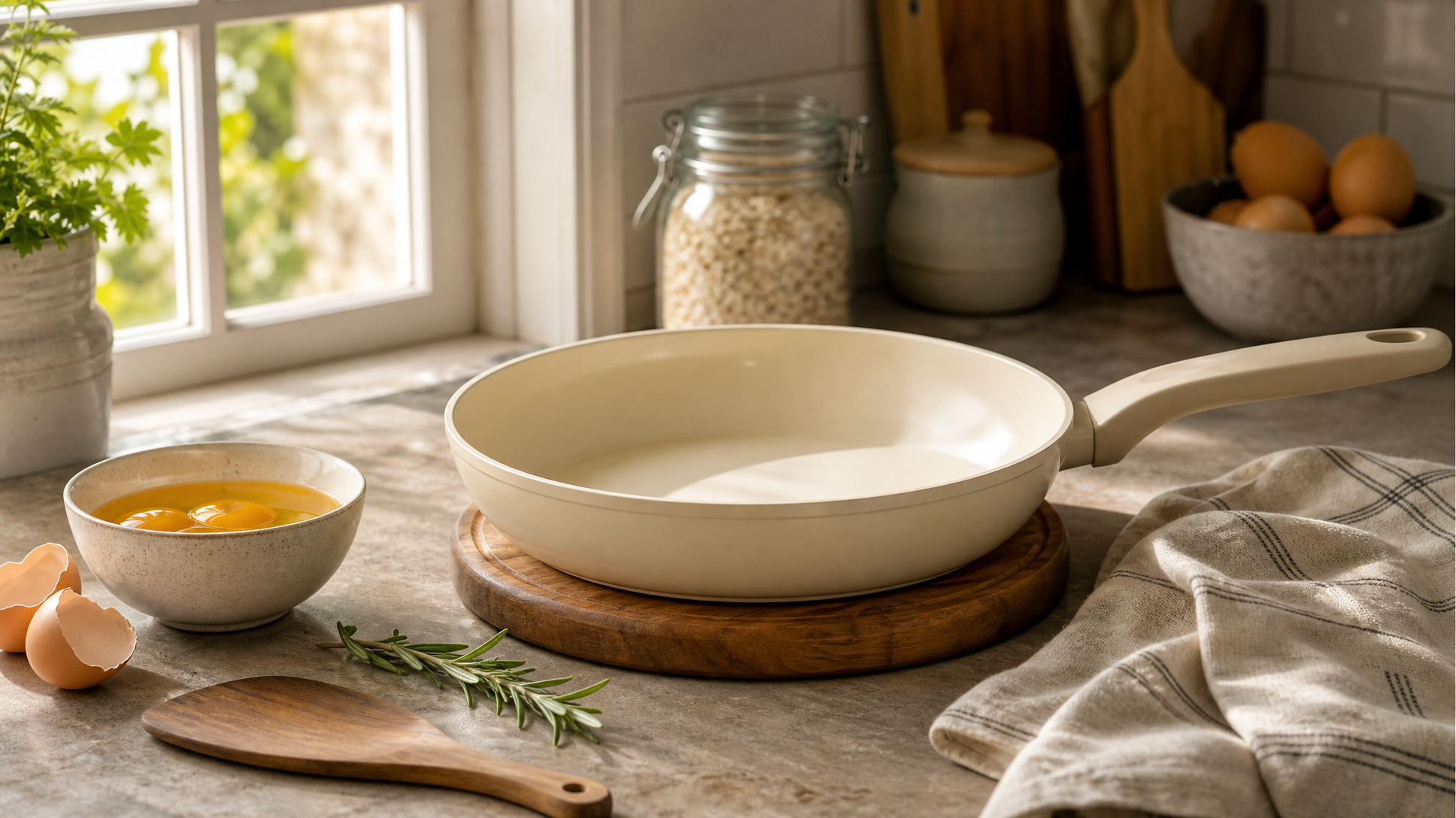
You're standing in front of a cookware listing, and the words "100% non-toxic," "PTFE-free," "PFOA-free," "ceramic-coated" are stacked on top of each other like a safety badge collection. It sounds reassuring. But if you've ever wondered whether any of that actually means what you think it means, you're not being paranoid — you're being sensible.
The short answer: ceramic cookware is generally a safer choice than older non-stick coatings, but the marketing around it glosses over some real limitations. Here's what the label tells you, what it doesn't, and how to get the most out of ceramic pans if you decide they're right for your kitchen.
What "Ceramic" Actually Means on a Cookware Label
Most ceramic cookware isn't made of solid ceramic — the kind you'd find in a pottery class. It's typically a metal pan (aluminum is common) coated with a silica-based gel that's cured at high heat to form a smooth, glass-like surface. That coating is what gets called "ceramic."
The key thing that makes this coating appealing is what it doesn't contain: PTFE (the synthetic polymer used in traditional non-stick coatings like Teflon) and PFOA (a processing chemical linked to health concerns that has largely been phased out of manufacturing anyway). Those absences are real and worth noting. At normal cooking temperatures, a well-made ceramic coating is inert — it doesn't release compounds into your food.
So "non-toxic" isn't a lie. It's just a narrow claim. It means the coating, when intact and used correctly, doesn't leach harmful substances. It doesn't mean the pan will perform that way indefinitely, or that all ceramic coatings are created equal.
The Part the Packaging Skips Over
Ceramic coatings degrade. This is the honest truth that most product listings bury in the fine print — or skip entirely.
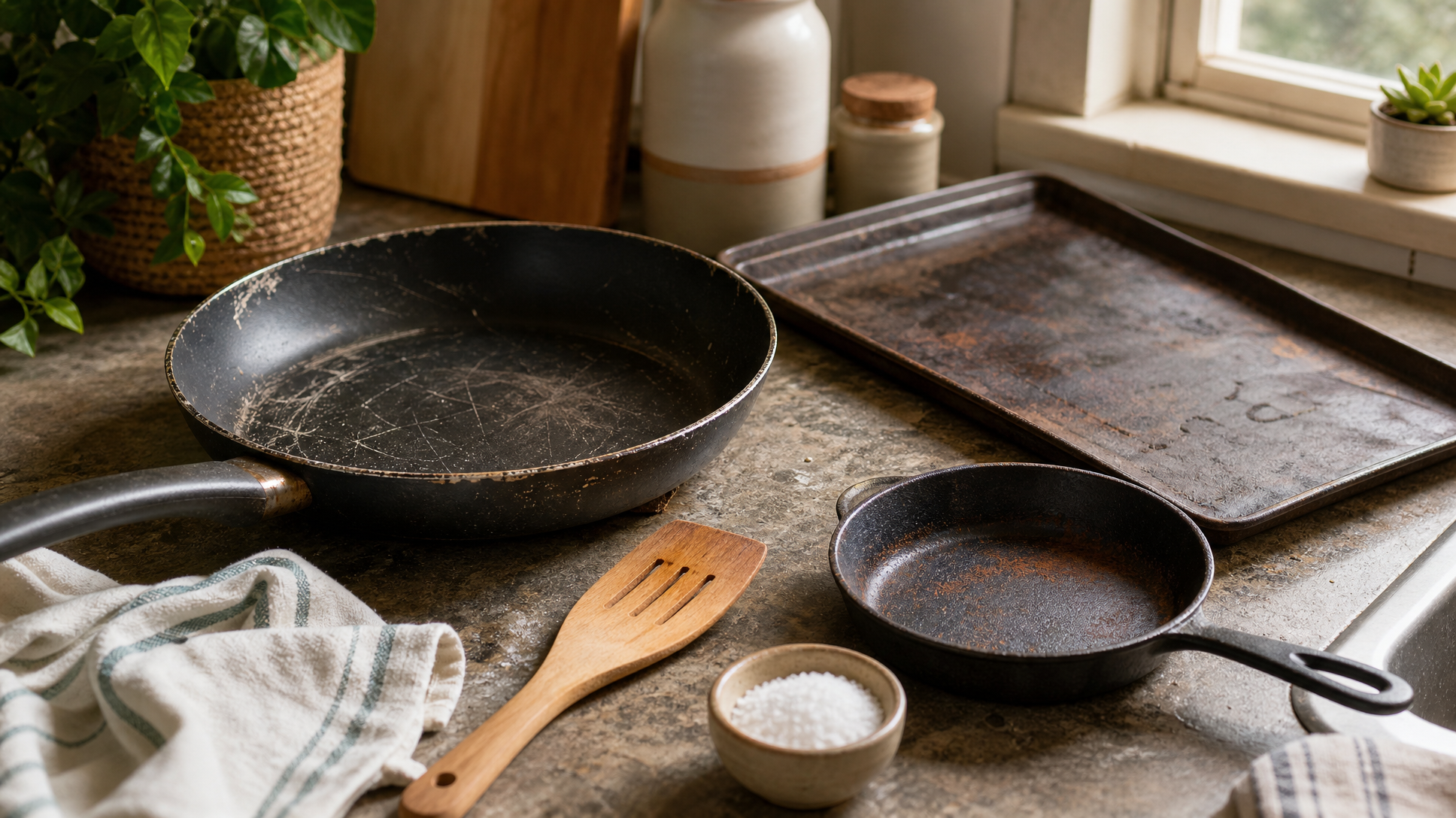
The coating's non-stick properties come from that smooth, glassy surface. Once it starts to scratch, chip, or develop micro-abrasions (which happens faster than most people expect), two things change: the pan loses its non-stick performance, and the base material underneath becomes more exposed. How quickly this happens depends on how the pan is used and cared for.
High heat is the main culprit. Ceramic coatings are more heat-sensitive than PTFE coatings — not less. Blasting an empty ceramic pan on high, or putting it under a broiler, can cause the coating to break down faster than gentle stovetop cooking would. The "safe at high temperatures" claim is relative: ceramic holds up better than PTFE at extreme temperatures in terms of what it releases, but the coating itself can physically degrade with repeated high-heat exposure.
Metal utensils, abrasive scrubbers, and the dishwasher all accelerate wear. And once the coating is visibly scratched or flaking, it's time to replace the pan — not because the ceramic itself is toxic, but because a damaged non-stick surface doesn't perform safely or effectively.
When Ceramic Cookware Actually Holds Up Well
None of this means ceramic is a bad choice. For a lot of home cooks, it's genuinely the right one. Here's where it excels:
- Low to medium heat cooking — eggs, sautéed vegetables, fish, pancakes. These are exactly the tasks where a non-stick surface earns its place, and ceramic handles them well.
- Households avoiding PTFE — if you're cooking for young children or just prefer to minimize synthetic polymer coatings in your kitchen, ceramic is a practical alternative.
- Easy cleanup — when the coating is in good condition, food slides off with minimal effort and a soft sponge.
Where it struggles: high-heat searing, oven finishing at high temperatures, and anything that requires a pan to last through years of daily heavy use without replacement. For those tasks, stainless steel or cast iron are more honest long-term investments.
How to Care for Ceramic Cookware So It Actually Stays Non-Toxic
The coating's safety and performance are directly tied to how intact it stays. These habits make a real difference:
- Keep the heat moderate. Medium is usually enough. Preheating an empty ceramic pan on high is one of the fastest ways to shorten its life.
- Use silicone, wood, or nylon utensils. No metal — ever. Even a brief scrape from a metal spatula can start the degradation process.
- Hand wash with a soft sponge. The dishwasher's heat and detergent are hard on ceramic coatings over time, even if the pan is labeled dishwasher-safe.
- Don't stack pans without protection. A cloth or pan protector between stacked pieces prevents surface scratches during storage.
- Replace when the coating is visibly damaged. A ceramic pan that's scratched, chipped, or no longer releasing food easily has done its job — it's not a safety crisis, but it's time for a new one.
Treated this way, a decent ceramic pan can give you a couple of years of good performance. Treated carelessly, it can degrade in months.
So — Is It Worth Buying?
Yes, with clear expectations. Ceramic cookware is a legitimate, lower-synthetic-coating option for everyday cooking at moderate heat. The "non-toxic" claim is accurate when the coating is intact and used properly. What it isn't is indestructible, permanent, or a replacement for every pan in your kitchen.
The best approach: use ceramic for the tasks it's actually designed for, care for it properly, and pair it with a stainless or cast iron pan for high-heat work. That combination covers most of what a home kitchen needs — without relying on any one pan to do everything.
If you're building out or refreshing your cookware setup, browse the kitchen and cookware options at Homenkitchenshop — with straightforward product descriptions so you know what you're actually getting before it arrives at your door. And if you're setting up a kitchen from scratch, the new-home essentials checklist is a good place to figure out what else you actually need.
Frequently Asked Questions
Is ceramic cookware truly free of PTFE and PFOA?
Genuine ceramic-coated cookware does not use PTFE (the polymer in traditional non-stick coatings) or PFOA (a processing chemical). The coating is silica-based, which is why brands can make those "free-from" claims. That said, always check the specific product — terms like "ceramic-inspired" or "ceramic-look" can be used loosely, so it's worth reading the full product description rather than just the headline claim.
Is it safe to use a ceramic pan if the coating is scratched?
A lightly scratched ceramic coating isn't an immediate health emergency the way a badly damaged PTFE pan might be, but it's still a sign the pan has passed its useful life. Once the coating is visibly chipped, flaking, or heavily scratched, the non-stick performance is gone and the base metal is more exposed. At that point, replacing the pan is the practical call.
Can I use ceramic cookware in the oven?
Many ceramic-coated pans are oven-safe up to a certain temperature — but that limit varies by pan and manufacturer, and exceeding it can accelerate coating degradation. Always check the specific product's stated oven-safe temperature before putting it in. For high-heat oven work (above around 400°F), stainless steel or cast iron is a more reliable choice.
How long does ceramic cookware typically last?
With proper care — moderate heat, soft utensils, hand washing — a good ceramic-coated pan can last a couple of years of regular use. With rough handling, it can degrade noticeably within months. Ceramic coatings are inherently less durable than the pan body itself, so longevity is mostly a function of how carefully the coating is treated day to day.